










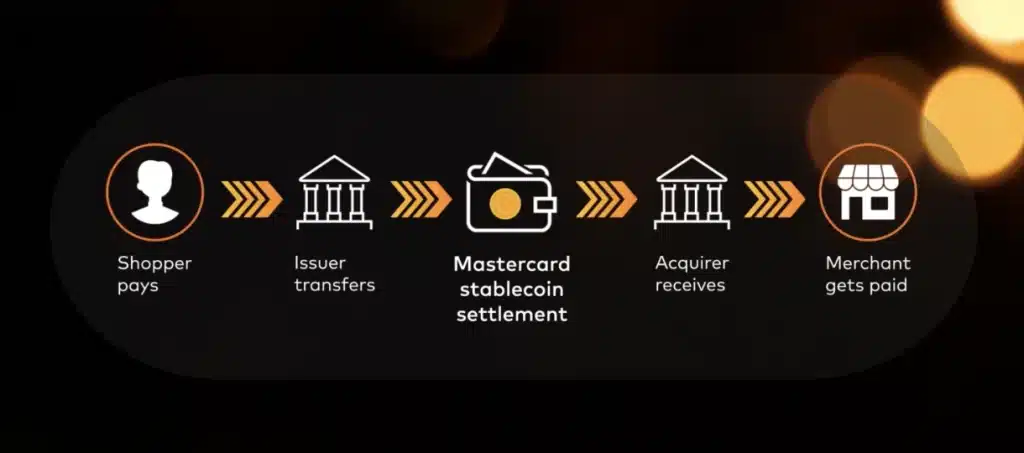
Are Stablecoin Reserves Really Safe? We Compare the Latest Disclosures
Three dollar stablecoins can all say they are “fully backed” while showing investors very different types of proof. Circle publishes a frequently updated reserve dashboard and monthly independent assurance for USDC. Tether releases quarterly reserve attestations for USDT, with a portfolio that includes more than the most liquid cash-like assets. Paxos publishes monthly reserve reports and independent attestations for PayPal USD (PYUSD). The details matter because a reserve number is not, by itself, a guarantee that every holder can redeem a token for one dollar at any moment.
TechGaged reviewed the issuers’ official disclosures available as of October 10, 2026. Our comparison separates asset coverage, portfolio composition, reporting assurance and real-world redemption access. Those are four different questions. A coin can have an apparently sufficient pool of assets while still exposing holders to operational, legal, bank, platform or secondary-market liquidity risks.
For context, “reserves” refer to assets intended to support the issuer’s obligations. They are not the same thing as the price quoted on an exchange, the issuer’s corporate profit, or the protections afforded to a bank deposit. Stablecoins are products with specific legal terms, not bank accounts by default.
Latest Stories
Which Blockchains Generate Real Revenue? Fees, Token Incentives and the Numbers That Matter

The Hidden Risks of Tokenized Stocks: What Investors Actually Own

Go-Ethereum v1.17.8 Arrives With Amsterdam Fork Preparations
USDC, USDT and PYUSD: what the available documents actually show
USDC / Circle
Public reporting reviewed: Reserve dashboard dated Oct. 8, 2026; monthly third-party reserve assurance
Key disclosed information: About $73.0B USDC in circulation and $73.2B in reserves on that date, according to Circle.
Important limitation: A dated dashboard and an assurance engagement do not guarantee uninterrupted redemption access during a banking or market shock.
USDT / Tether
Public reporting reviewed: Q2 2026 reserve attestation, as of June 30
Key disclosed information: About $187.75B in total assets and $183.64B in liabilities, a reported $4.11B excess.
Important limitation: Different reporting date and balance-sheet scope; do not compare it directly with Circle’s daily dashboard as if both were same-day ratios.
PYUSD / Paxos
Public reporting reviewed: Monthly self-reported portfolio statements and KPMG independent attestations
Key disclosed information: Paxos says reserves consist of dollar deposits, Treasury securities and related cash-equivalent instruments.
Important limitation: Readers should check the latest posted month and the exact issuer redemption terms, not assume that platform access equals direct issuer redemption.
Methodology: Figures and descriptions are drawn from Circle’s reserve dashboard, Tether’s Q2 2026 release, and Paxos’ PYUSD transparency portal. The dates, accounting scopes and frequencies are deliberately shown because these are not three simultaneous standardized balance sheets. Figures are rounded and can change in later reports.
USDC: Circle reported approximately $73.0 billion outstanding and $73.2 billion in reserves on October 8. Its disclosure explains that reserve assets include bank deposits, short-dated US Treasuries and overnight Treasury repurchase agreements, some of them held through the Circle Reserve Fund managed by BlackRock. Circle publishes reserve information and issuance/redemption flows during the month, alongside monthly independent assurance.
This makes recent reserve visibility relatively straightforward: readers can see a current outstanding supply figure, check the reserve categories and follow redemptions over several periods. But “monthly assurance” must be read precisely. It is an independent professional examination of specified assertions for a defined period or point in time, not a promise that the company or its banking partners cannot fail.
USDT: Tether’s July 31 release, based on a BDO attestation as of June 30, presents $187,751,426,411 in assets and $183,641,897,215 in liabilities. That produces a $4,109,529,196 reported difference. The issuer says short-term government-related instruments and liquidity facilities remain central to the portfolio; it also discusses gold and Bitcoin exposures and a reduction in secured lending.
To understand the safety implications, readers need both sides of that picture. A positive excess of reported assets over liabilities is meaningful, but the liquidity of each reserve category matters during rapid redemptions. Gold and Bitcoin carry price volatility; secured loans introduce counterparty exposure; and the speed of conversion into dollars can matter separately from reported valuation. Tether’s issuer-level balance sheet should not be treated as a uniform, same-day proof of cash available for every withdrawal request.
PYUSD: Paxos explains that it publishes its own monthly portfolio reports shortly after month-end and separate independent attestation reports. Its transparency portal identifies KPMG as the independent firm for attestations issued on or after February 28, 2025. This distinction between management-prepared reports and independently examined statements is useful. They do not have identical evidentiary value, even if they describe the same reserve pool.
PayPal’s cryptocurrency terms also demonstrate why reserves cannot be considered in isolation. PYUSD is issued by Paxos rather than PayPal itself, and PayPal describes separate contractual arrangements for buying, selling and holding PYUSD inside its application. A holder using an exchange or custodial wallet needs to consider that intermediary’s rules in addition to the issuer’s reserve statements.
Four tests that matter more than the words “fully backed”
Test 1: Are the numbers actually comparable? A balance sheet published at June 30 cannot be treated as if it reports the portfolio at October 8. Nor is a reported excess of total corporate assets necessarily interchangeable with a reserve dashboard designed specifically to describe assets backing circulation. Our table deliberately refuses to manufacture a same-date “winner.” A fair comparison begins with aligned dates, common definitions and a documented treatment of liabilities.
Test 2: How quickly can assets become dollars? Treasury bills and overnight Treasury repos can offer greater short-term liquidity than assets dependent on volatile markets or private counterparties, although even liquid instruments face settlement and operational risk. A reserve that looks valuable in accounting terms may not be available at exactly the time a surge of redemptions arrives. Investors should check concentration by custodian and bank, maturity profiles, borrowing arrangements and exposure to collateral haircuts when disclosed.
Test 3: Who can redeem, and through which channel? The presence of a one-dollar primary redemption arrangement is not identical to a guarantee that every retail holder can directly access it at any size, in any country and at any hour. Minimums, identity requirements, banking hours, sanctions screening, issuer eligibility and third-party custody can all affect the path from token to dollars. Selling a token on an exchange is a different route: the price depends on market liquidity and spreads, even if the issuer’s primary peg mechanism remains intact.
Test 4: What exactly did the independent accountant examine? An attestation assesses defined information under an agreed framework. It is not automatically a full audit of all operating controls, business risks or real-time reserves. A stronger due-diligence process reads the accountant’s report itself, identifies the date of examination, scope, accounting criteria, limitations and any qualifications. Looking only at a press release strips away important context.
Our seven-check guide to stablecoin reserve reports explains how to read an attestation and trace reserve categories back to their underlying disclosures.
A practical stress scenario: why a sound reserve can still trade below $1
Consider a hypothetical weekend in which a banking channel temporarily cannot process fiat settlements. Tokens continue changing hands on exchanges while some arbitrage participants cannot redeem through the primary issuer. Secondary-market sellers may accept 99 cents—or less—to exit immediately. That discount does not necessarily prove the issuer’s assets are worth less than its liabilities, but it does demonstrate that instant tradability and issuer solvency are not identical.
The reverse misunderstanding is also possible. A token trading near one dollar during normal conditions does not independently verify the quality or legal segregation of its backing assets. Market confidence can last until it is suddenly tested.
Our disclosure review suggests a simple hierarchy of questions: first, what assets back the token and at what date? Second, who independently verified which assertions? Third, which legal entity owes redemption? Fourth, what happens if the bank, custodian, market maker or trading venue becomes unavailable?
To make this repeatable, an investor can save a five-field note before holding a material stablecoin balance: disclosure date; reserve mix; independent report date and scope; redemption counterparty and eligibility; contingency plan if an exchange suspends withdrawals. The best answer is not a ranking based on brand recognition—it is a documented understanding of each issuer’s promises and the limits of those promises.
Bottom line: the latest available disclosures show substantial reported assets backing USDC, USDT and PYUSD, but they do not establish that all three share an identical risk profile. Their reporting frequencies, balance-sheet definitions, custody arrangements and redemption channels differ. A reserve headline is the beginning of due diligence, not the end.
Reporting basis: issuer disclosures reviewed October 10, 2026; USDC dashboard dated October 8, Tether Q2 attestation dated June 30, and Paxos ongoing monthly reporting portal. No investment recommendation is made.
How do you rate this article?
Subscribe to our YouTube channel for crypto market insights and educational videos.






Join our Socials
Briefly, clearly and without noise – get the most important crypto news and market insights first.
Most Read Today
1
Bitcoin ETF Inflows Collapse 88% — But On-Chain Activity Is Heating Up
2Noah Closes a $38M Seed Round as Stablecoin Payments Move Beyond the Wallet
3Billions On The Line As ETH Hits Its Max Pain Level
4From $300 to $2.1 Million: Crypto Trade That Opened 2026 With a Bang
5AI Traces $387M Bitget Heist to North Korea as 2026 Losses Cross $1B
Latest






8
Also read
Similar stories you might like.

Blockchain
Which Blockchains Generate Real Revenue? Fees, Token Incentives and the Numbers That Matter
TechGaged | 2026-10-10

Blockchain
The Hidden Risks of Tokenized Stocks: What Investors Actually Own
TechGaged | 2026-10-10

Blockchain
Go-Ethereum v1.17.8 Arrives With Amsterdam Fork Preparations
Rokas | 2026-10-10
Crypto News
The CFTC’s New Crypto Rules Have a Major Blind Spot — Here’s What They Actually Cover
TechGaged | 2026-10-10

Crypto Guides
What Happens If a Layer 2 Sequencer Stops? Check the Exit Before Depositing
TechGaged | 2026-10-07

Crypto Guides
Before You Bridge Crypto: A Checklist for the Asset, Route and Exit
TechGaged | 2026-10-07

Crypto Guides
Tokenized Treasury Funds vs. Stablecoins: What You Own and How You Exit
TechGaged | 2026-10-07
Crypto Guides
A Whale Sent Crypto to an Exchange: How to Check Whether It Signals Selling
TechGaged | 2026-10-07
Crypto Guides
Rising DeFi TVL Does Not Always Mean New Money: How to Read the Data
TechGaged | 2026-10-07

Crypto Guides
Slippage vs. Price Impact: Why a Crypto Swap Can Cost More Than the Fee
TechGaged | 2026-10-07