








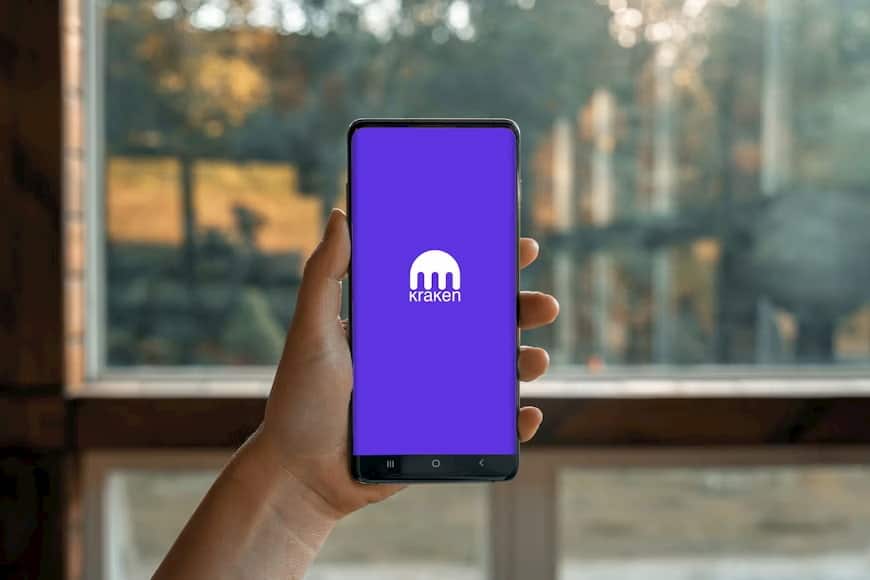
A woman holding a phone with Kraken logo on it
A token that follows Tesla or Apple shares is not necessarily a share in Tesla or Apple. That simple distinction can determine whether a buyer has voting rights, can demand delivery of the underlying stock, receives a contractual cash adjustment, or merely has a claim against a platform. In 2026, tokenized equities are appearing in several different legal forms, and investors can easily mistake a familiar stock ticker for a familiar set of shareholder protections.
The issue has become more pressing as US regulators clarify the difference between issuer-sponsored tokens, third-party custody models and synthetic products. In a January 28 statement, three divisions of the US Securities and Exchange Commission explained that a tokenized security may represent substantially different ownership and contractual arrangements. More recently, the SEC approved a temporary, conditional innovation exemption for some on-chain trading of tokenized US-listed shares on authorized venues. Neither development makes every product marketed as a “stock token” legally equivalent to owning an ordinary share.
To make the differences concrete, TechGaged compared the SEC’s published taxonomy with the current risk disclosures of two widely discussed retail offerings: Kraken’s xStocks and Robinhood Europe’s Classic Stock Tokens. The result is a useful warning: even products tied to exactly the same public company can give holders different legal rights.
Latest Stories
Are Stablecoin Reserves Really Safe? We Compare the Latest Disclosures

Go-Ethereum v1.17.8 Arrives With Amsterdam Fork Preparations
The CFTC’s New Crypto Rules Have a Major Blind Spot — Here’s What They Actually Cover
Three tokenized-stock structures that should never be confused
Issuer-sponsored security token
What the token generally represents: A security recorded on a blockchain by the company or its authorized agent.
The ownership question: Does the issuer’s authoritative securityholder record recognize the buyer as a holder?
Third-party custodial representation
What the token generally represents: A claim or entitlement linked to an underlying share held by a third party.
The ownership question: Does the token holder have direct rights in the share, an indirect entitlement or only contractual exposure to an intermediary?
Synthetic or derivative stock token
What the token generally represents: A contract whose return is calculated from the price of a referenced stock.
The ownership question: Who owes the contractual payment, and does the holder have any claim against the stock issuer?
Methodology: these are broad regulatory categories drawn from the SEC’s January 2026 statement. A particular product’s prospectus, terms and applicable law determine its legal classification. The presence of blockchain settlement alone does not answer the ownership question.
In the issuer-sponsored model, the company or its agent can integrate distributed-ledger records into the securityholder register. An on-chain transfer may therefore transfer the security itself. In other designs, a token is simply a messaging layer attached to an off-chain record, or a claim issued by someone other than the public company. The legal record—not the marketing name—is what matters.
Third-party systems add another layer. A custodial token can depend on securities being held by a broker or custodian for the benefit of an intermediary. Its holder may have an indirect entitlement but not the same rights as someone named on a company register. A synthetic instrument goes further: its issuer promises economic exposure to a stock’s performance, without necessarily transferring any interest in the stock.
Two real products: xStocks and Robinhood Classic Stock Tokens
Kraken xStocks. In its published risk disclosure, Kraken identifies xStocks as products issued by Backed Assets (JE) Limited and states that holders do not own the underlying shares. The disclosure says holders do not receive voting rights, rights to distributions from the underlying company, or claims to the underlying securities merely by holding the xStock. Economic performance may be linked to the referenced share, but the investment is not the same as becoming a shareholder. The exact risks and availability also depend on the product terms and jurisdiction.
Robinhood Europe Classic Stock Tokens. Robinhood’s own FAQ describes these as derivative contracts with Robinhood Europe, not purchases of the actual stock. They track prices recorded on a blockchain, but a customer cannot currently withdraw these tokens to an external wallet. The platform says holders do not obtain voting rights. It also describes a cash-equivalent distribution process for eligible dividends, which is not the same legal right as a direct shareholder dividend.
Do you directly own the referenced company’s share?
Kraken xStocks: No, according to Kraken’s disclosure.
Robinhood Classic Stock Tokens: No, according to Robinhood’s FAQ.
Can you vote as a shareholder?
Kraken xStocks: No.
Robinhood Classic Stock Tokens: No.
How are dividends handled?
Kraken xStocks: No direct right to the underlying company’s distributions; consult product terms for economic adjustments.
Robinhood Classic Stock Tokens: Robinhood describes eligible cash dividend-equivalent payments under its product mechanics.
Can you move the product into another wallet?
Kraken xStocks: Check the specific supported network, jurisdiction and platform conditions.
Robinhood Classic Stock Tokens: Robinhood says external transfers are not currently supported for Classic Stock Tokens.
Who bears contractual or intermediary risk?
Kraken xStocks: Review the issuer, custody, redemption and distribution agreements.
Robinhood Classic Stock Tokens: The investor holds a derivative contract with Robinhood Europe, under applicable terms.
Comparison based on the cited providers’ public disclosures reviewed October 10, 2026. Product terms and availability can change; this table is not a recommendation of either service.
These products may provide convenience or easier access to economic exposure, but access and legal equivalence are separate benefits. A fractional position with a 24-hour market interface may still depend on a market-making system, off-chain custodians, trading restrictions or the continued solvency of the contractual counterparty.
Five failure scenarios to test before buying
1. The token provider fails. If the entity issuing or administering the token becomes insolvent, your recovery may depend on segregated assets, contractual ranking, custodial records and jurisdiction. An on-chain wallet balance does not by itself establish an enforceable claim to the issuer’s underlying shares. Ask specifically whether assets are protected against the provider’s creditors and how the claim would be proved.
2. The underlying stock halts or delists. A traditional exchange may halt trading; a stock token venue can have its own suspension or forced-close procedures. Robinhood’s corporate actions policy, for example, describes trading pauses when events such as mergers and delistings need processing. The token market is not guaranteed to operate continuously when the reference market cannot.
3. The stock pays a dividend. An economic adjustment can resemble a dividend in value while remaining a different legal entitlement, with different fees or tax consequences. Investors should ask who receives the issuer’s cash payment first, when it is passed on, whether withholding applies and whether the product terms permit adjustments.
4. The token and share prices diverge. When markets have different operating hours, liquidity, redemption mechanisms or settlement times, a token may trade at a premium or discount. An apparently cheap token is not necessarily an arbitrage opportunity if investors cannot redeem it for the underlying stock.
5. The blockchain or venue fails. Tokenization introduces technical dependencies: smart contracts, wallets, permission controls, bridges and off-chain ledger reconciliation. Problems can interrupt transfers even when the publicly listed company and its shares are functioning normally.
Before entering any position, read the prospectus or key information document and find a written answer to seven questions: What exact legal instrument is issued? Who is the issuer and where is it regulated? Who holds underlying shares, if any? What is the redemption mechanism? Are voting or dividend rights direct, indirect, substituted or absent? What happens in insolvency? Can trading or transfer be suspended?
The same due-diligence principle appears in other tokenized instruments. Our analysis of tokenized Treasury funds and stablecoins explains why the terms of a claim matter as much as the asset named on a token.
Bottom line: tokenization can alter the machinery of trading and settlement, but it does not automatically transfer the full legal bundle of shareholder rights. The buyer should be able to explain, in one sentence, what they own and who must pay or deliver if they want to exit. If the platform cannot answer that precisely, its stock-like ticker is not sufficient information for an investment decision.
Editorial methodology: SEC staff taxonomy (January 28, 2026), SEC innovation exemption announcement (September 17, 2026), Kraken xStocks risk disclosure, and Robinhood Europe product terms reviewed October 10, 2026. This comparison does not constitute investment or legal advice.
How do you rate this article?
Subscribe to our YouTube channel for crypto market insights and educational videos.





Join our Socials
Briefly, clearly and without noise – get the most important crypto news and market insights first.
Most Read Today
1
Bitcoin ETF Inflows Collapse 88% — But On-Chain Activity Is Heating Up
2Noah Closes a $38M Seed Round as Stablecoin Payments Move Beyond the Wallet
3Billions On The Line As ETH Hits Its Max Pain Level
4From $300 to $2.1 Million: Crypto Trade That Opened 2026 With a Bang
5AI Traces $387M Bitget Heist to North Korea as 2026 Losses Cross $1B
Latest





8
Also read
Similar stories you might like.
Crypto Guides
Are Stablecoin Reserves Really Safe? We Compare the Latest Disclosures
TechGaged | 2026-10-10
Blockchain
Go-Ethereum v1.17.8 Arrives With Amsterdam Fork Preparations
Rokas | 2026-10-10
Crypto News
The CFTC’s New Crypto Rules Have a Major Blind Spot — Here’s What They Actually Cover
TechGaged | 2026-10-10

Crypto Guides
What Happens If a Layer 2 Sequencer Stops? Check the Exit Before Depositing
TechGaged | 2026-10-07

Crypto Guides
Before You Bridge Crypto: A Checklist for the Asset, Route and Exit
TechGaged | 2026-10-07

Crypto Guides
Tokenized Treasury Funds vs. Stablecoins: What You Own and How You Exit
TechGaged | 2026-10-07
Crypto Guides
A Whale Sent Crypto to an Exchange: How to Check Whether It Signals Selling
TechGaged | 2026-10-07
Crypto Guides
Rising DeFi TVL Does Not Always Mean New Money: How to Read the Data
TechGaged | 2026-10-07
Crypto Guides
Slippage vs. Price Impact: Why a Crypto Swap Can Cost More Than the Fee
TechGaged | 2026-10-07
Crypto Guides
DeFi Health Factor Explained: How to Calculate Your Liquidation Buffer
TechGaged | 2026-10-07