
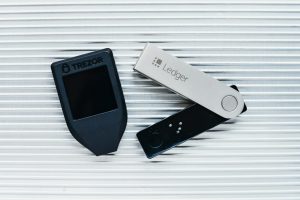





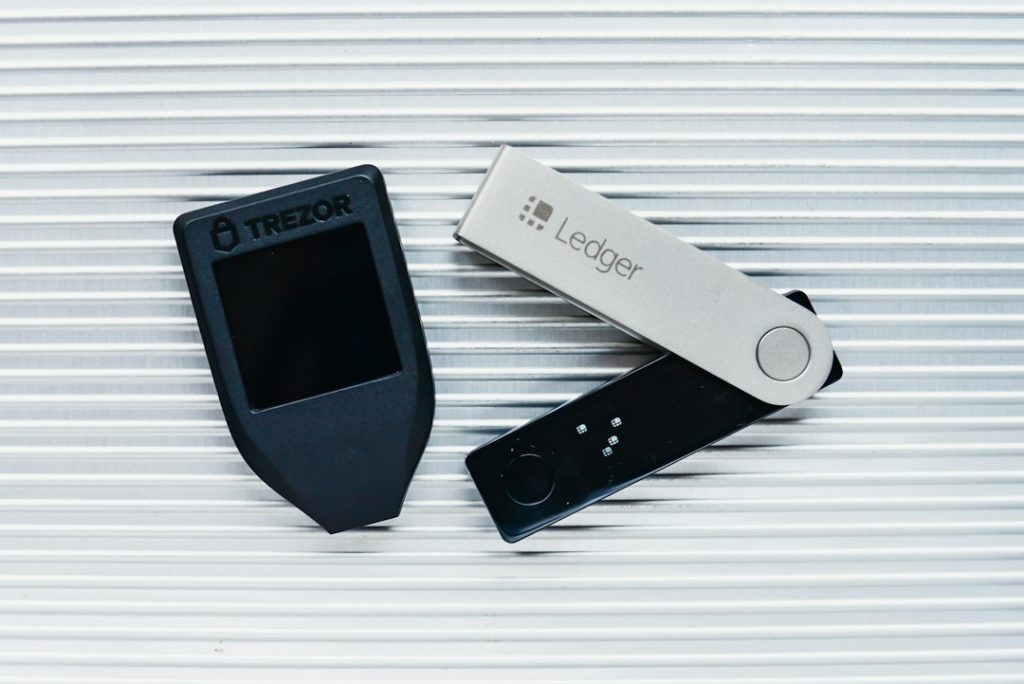
Cryptocurrency hardware storage devices illustrating exchange custody and proof of reserves
Proof of Reserves Is Not Proof of Solvency: Eight Tests for a Crypto Exchange
A crypto exchange can show a large wallet balance and still leave its customers with unanswered questions. The missing half is what the exchange owes. Proof of Reserves (PoR) is useful when it connects verified assets with a credible accounting of client liabilities, but a wallet screenshot or a high reserve percentage is not a full solvency audit.
That distinction is crucial whenever users are deciding whether to keep significant assets on a custodial platform. TechGaged examined the public verification processes described by Kraken and OKX. The two exchanges explain different cryptographic techniques and report formats, but both show why asking for proof of assets alone is an incomplete test. This guide is an independent due-diligence framework, not a claim that either company’s current financial position has been audited by TechGaged.
A useful mental model has three layers. Proof of assets asks whether the custodian controls the assets it reports. Proof of liabilities asks whether the balances it owes customers are accurately included. Solvency asks a broader question about the firm’s financial obligations, liquidity, encumbrances, operational costs and capacity to meet them. A PoR exercise can illuminate the first two without conclusively answering the third.
Latest Stories
CFTC Draws a New Line Between Prediction Market Event Contracts and Casino Wagers

EU Crypto Platforms Face New ESMA Stablecoin Restrictions — Even Custody Is in Scope
How Safe Is an Ethereum Layer 2? Five Risks That TVL and Transaction Speed Cannot Show
The eight checks investors can perform
- Check the snapshot date. A reserve report establishes an observation at a point in time, not a perpetual guarantee. Compare the date with subsequent market events and look for an established cadence rather than a one-time promotional report.
- Check which coins and services were included. A report covering BTC, ETH and a few major stablecoins does not automatically cover hundreds of other listed tokens. Verify whether staking balances, derivatives collateral, margin accounts, lending, subaccounts and institutional customers are included or explicitly excluded.
- Demand the liabilities side. Ask how the exchange calculates customer balances and whether negative account entries or intercompany offsets can distort totals. Kraken’s published explanation emphasizes matching customer liabilities with controlled assets rather than publishing wallet holdings in isolation.
- Verify your own inclusion. A Merkle proof connects a user’s snapshot balance to a published cryptographic root. Kraken describes a self-verification workflow within Kraken Pro; OKX describes an approach using Merkle data and zero-knowledge proofs. If the platform does not allow independent user-level checks, users must rely more heavily on the provider’s assertions.
- Examine asset control. Public blockchain addresses can show balances, but who owns the private keys? Look for independent procedures demonstrating control of reported wallets. A temporarily borrowed balance or an address belonging to an unrelated custodian should not be mistaken for unencumbered reserves.
- Read the accountant’s exact scope. An agreed-upon procedures report describes specific work performed. It may not express a broad audit opinion, and it cannot guarantee that risks outside the engagement were investigated. Find the firm, date, procedures, exceptions and management representations.
- Ask whether assets are pledged or unavailable. An on-chain asset can exist yet be pledged as collateral, subject to legal claims, or difficult to transfer promptly. PoR does not necessarily establish the status of every loan, affiliate arrangement or off-chain obligation.
- Test the exit route. The customer’s practical protection is the ability to withdraw and reconcile balances under ordinary conditions and during market stress. Review withdrawal rules, limits, proof of successful transactions, customer terms and the legal entity responsible for custody.
Illustrative example: suppose an exchange reports control of 110,000 units of an asset and includes verified customer liabilities of 100,000 units. Its simple coverage ratio would be 110%. That does not mean it has a 10% cash-profit margin, nor does it prove there are no additional corporate liabilities. If the asset wallet can be encumbered by a third party, the headline ratio can mislead. All numbers in this example are hypothetical.
Some cryptographic systems improve privacy. In zero-knowledge systems, a platform may be able to demonstrate that its calculation meets constraints without exposing every customer’s balance. But the mathematical proof still depends on the completeness and integrity of the underlying data and correctly implemented verification software. A privacy-preserving proof is not an exemption from independent controls.
What a good report cannot tell you
PoR does not prove that exchange software is secure, that a bank or trading partner will not fail, or that withdrawals can never be halted. It may not reveal corporate debts, pending lawsuits, operating losses, affiliated-entity obligations or assets held outside the report’s scope. Investors need separate evidence for each of these risks.
Read the full user agreement and use the snapshot as one piece of evidence. If your balance is significant, consider operational diversification and understand the trade-offs of self-custody rather than assuming either approach is risk-free. A self-managed wallet removes certain intermediary exposures but creates key management and recovery risks.
Our recent comparison of stablecoin reserve disclosures examines another important distinction: an issuer’s reserve attestation describes a different legal and operational arrangement from an exchange’s PoR.
Bottom line: Proof of Reserves is valuable when assets, liabilities, client inclusion and independent scope can all be checked. The most revealing question is not “What percentage does the exchange advertise?” but “What exactly did the report verify, on which date, for which customers, and what remains outside it?”
Methodology: comparison of the public verification frameworks described by Kraken and OKX, reviewed October 12, 2026. No exchange-specific solvency conclusion is drawn.
How do you rate this article?
Subscribe to our YouTube channel for crypto market insights and educational videos.






Join our Socials
Briefly, clearly and without noise – get the most important crypto news and market insights first.






8
Also read
Similar stories you might like.

Crypto News
CFTC Draws a New Line Between Prediction Market Event Contracts and Casino Wagers
TechGaged | 2026-10-12

Crypto News
EU Crypto Platforms Face New ESMA Stablecoin Restrictions — Even Custody Is in Scope
TechGaged | 2026-10-12
Blockchain
How Safe Is an Ethereum Layer 2? Five Risks That TVL and Transaction Speed Cannot Show
TechGaged | 2026-10-12
Blockchain
Which Blockchains Generate Real Revenue? Fees, Token Incentives and the Numbers That Matter
TechGaged | 2026-10-10
Crypto Guides
Are Stablecoin Reserves Really Safe? We Compare the Latest Disclosures
TechGaged | 2026-10-10
Blockchain
The Hidden Risks of Tokenized Stocks: What Investors Actually Own
TechGaged | 2026-10-10
Blockchain
Go-Ethereum v1.17.8 Arrives With Amsterdam Fork Preparations
Rokas | 2026-10-10
Crypto News
The CFTC’s New Crypto Rules Have a Major Blind Spot — Here’s What They Actually Cover
TechGaged | 2026-10-10
Crypto Guides
What Happens If a Layer 2 Sequencer Stops? Check the Exit Before Depositing
TechGaged | 2026-10-07

Crypto Guides
Before You Bridge Crypto: A Checklist for the Asset, Route and Exit
TechGaged | 2026-10-07