














Heaps of Bitcoin tokens with blurred trading chart background. Source: Techgaged/Shutterstock.
Bitcoin is once again outperforming the S&P 500 on a session-by-session basis. After a period of clear underperformance earlier this year, the balance has shifted, and that change could begin to influence how capital is allocated across asset classes.
From Weakness to Relative Strength
In June, Bitcoin was winning only about one trading day in five against the S&P 500 — its weakest stretch in more than five years. That low point has given way to a more constructive picture.
Over recent weeks the win rate has climbed, and on October 20 it flipped back above the 50% mark according to Glassnode data.
Latest Stories
Privacy Coins Could Be Headed for Another Rally — One Factor Matters Most

What Would Solana’s Consensus Look Like in a Post-Quantum World?

Ethereum’s Next Move Could Catch the Market Off Guard — Watch These Signals
Bitcoin is now winning more sessions than it loses against the equity benchmark.
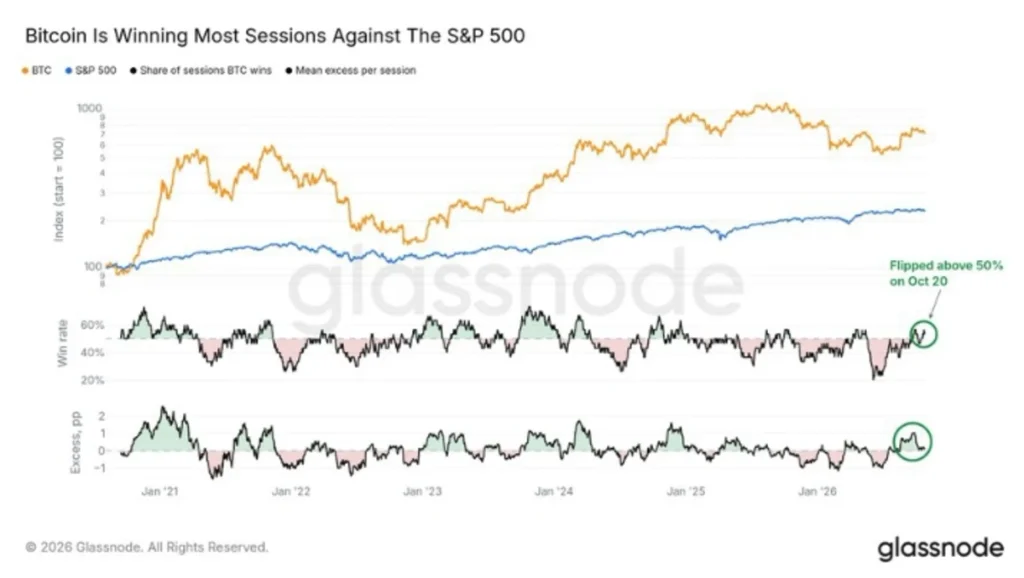
This kind of relative strength often goes unnoticed while absolute price action remains soft.
Yet persistent outperformance can gradually attract attention from investors who track cross-asset momentum.
Price Context as of Late October 2026
As of October 28, 2026, Bitcoin is trading near $80,413, down 5.0% over the past seven days. The chart from October 22 to October 28 shows a decline from the mid-$84,000s into the low $80,000s.
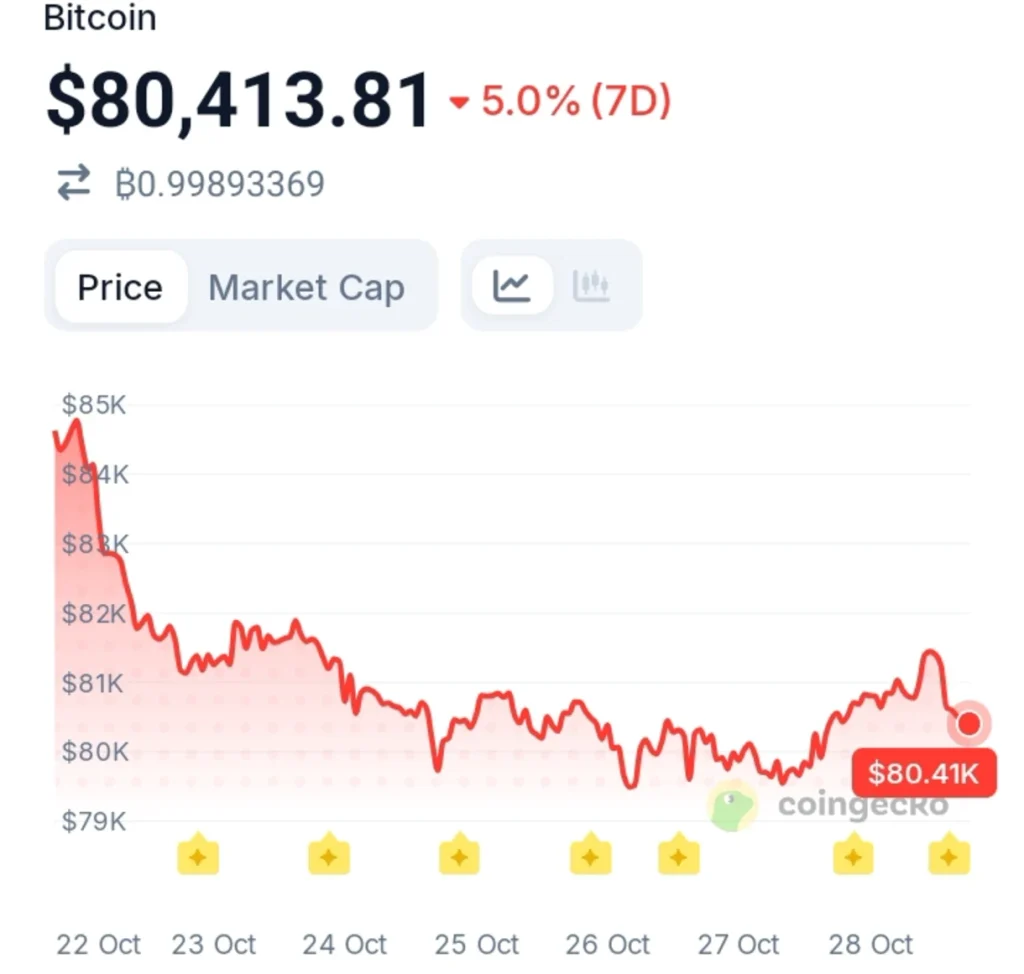
Despite the weekly drop, the recent improvement in session wins against the S&P 500 stands in contrast to the softer absolute price trend. This divergence also echoes Bitcoin’s recent performance against stocks and gold.
Why Relative Performance Matters
When an asset begins to win more trading days against a major benchmark, the effect can become self-reinforcing.
Portfolio managers and systematic strategies that monitor relative strength may start to tilt exposure toward the stronger performer.
In Bitcoin’s case, sustained outperformance versus equities could encourage a broader rotation of capital into the asset class, especially if traditional markets face their own headwinds.
The current improvement is still early. A few weeks of better session results do not yet constitute a confirmed trend.
But the contrast with the extreme weakness seen in June is clear, and markets often respond once relative strength becomes more widely recognized.
Institutional allocation decisions could also influence the pace of any shift, as discussed in this analysis of institutional Bitcoin demand.
A Potential Catalyst for Rotation
Bitcoin’s ability to beat the S&P 500 on a growing number of trading days marks a meaningful shift from its weakest period in years.
If the pattern continues, it could help set the stage for a larger reallocation of capital toward crypto.
Whether that rotation materializes will depend on how long the relative strength lasts — and whether absolute price action eventually follows the same path.
Disclaimer:
This article is for informational purposes only and does not constitute financial, investment, or trading advice. The views expressed are based on publicly available data, market observations, and the author’s interpretation at the time of writing. Cryptocurrency markets are highly volatile and unpredictable, and past performance or current technical setups do not guarantee future results. Readers should conduct their own research and consult with a qualified financial advisor before making any investment decisions. TechGaged does not accept liability for any losses incurred based on the information presented.
How do you rate this article?
Subscribe to our YouTube channel for crypto market insights and educational videos.






Join our Socials
Briefly, clearly and without noise – get the most important crypto news and market insights first.
Most Read Today
1
Altcoin Speculation Retreats From September Highs: What It Means for Buyers
2Bitcoin Loses 30K Wallets in Days as Smaller Holders Lose Patience
3Altcoins Get Crushed as Bitcoin Fights for $62K
4Bitcoin Overlay With Nikkei Points To Multi-Year Rally
5Chainlink’s Address Spike May Not Be Organic — Bot Activity or Real Users?
Latest






8
Also read
Similar stories you might like.

Crypto News
Ethereum’s Next Move Could Catch the Market Off Guard — Watch These Signals
Azeez | 2026-10-28

Crypto News
Bitcoin Loses 30K Wallets in Days as Smaller Holders Lose Patience
Azeez | 2026-10-27

Crypto News
XRP Whales Control 68.5% of Supply — A Bullish Signal or a Risk?
Azeez | 2026-10-27

Crypto News
TRON Daily Active Accounts Jump 12% — What It Could Mean for TRX
Azeez | 2026-10-27

Crypto News
Bitcoin Retail Deposits Surge as Whale Behavior Signals a Growing Market Divide
Azeez | 2026-10-26

Crypto News
Bitcoin Faces a Double Macro Challenge as Oil Prices Stay Above $100
Azeez | 2026-10-23
Crypto News
Bitcoin Is Back Above Treasury Cost Basis — But the Biggest Buyers Remain Cautious
Azeez | 2026-10-22

Crypto News
ZEC Surges Toward $1,300 as Zcash’s Major Upgrade Approaches
Azeez | 2026-10-22

Crypto News
Record ETH Staking Meets Falling Yields: What Does It Mean for Price?
Azeez | 2026-10-21

Crypto News
HYPE’s Liquidation Map Reveals a Dangerous Imbalance
Azeez | 2026-10-21