




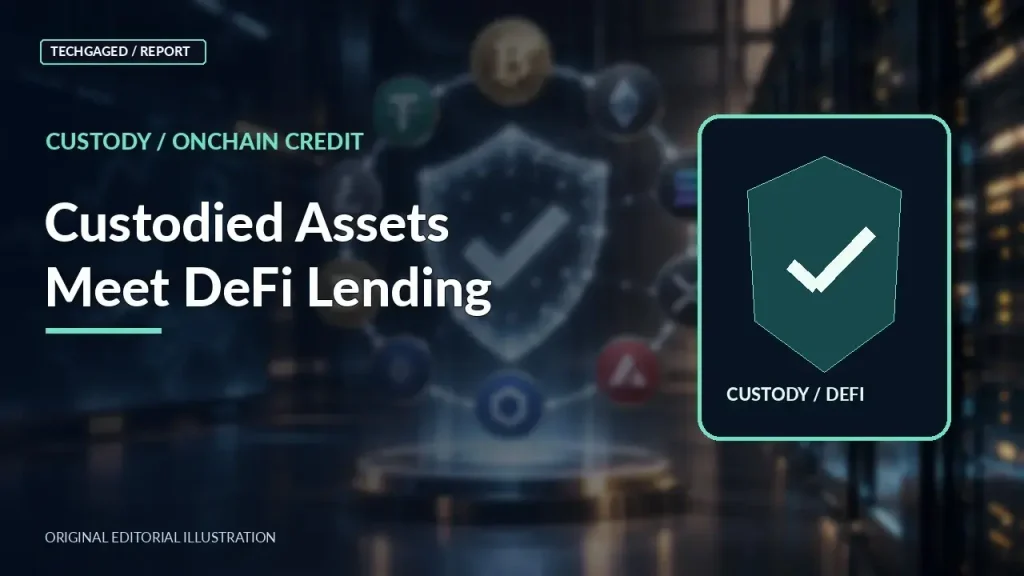
Chainlink and Anchorage CustodySync connection to DeFi lending; original editorial illustration
Chainlink and Anchorage Bring Custodied Crypto Into DeFi Lending Without Moving Collateral
Chainlink and Anchorage Digital have introduced an institutional lending arrangement designed to connect assets held at a qualified custodian with decentralized-finance borrowing markets, without requiring those underlying holdings to be transferred out of custody. The design attempts to bridge a longstanding operational divide between regulated digital-asset storage and onchain credit.
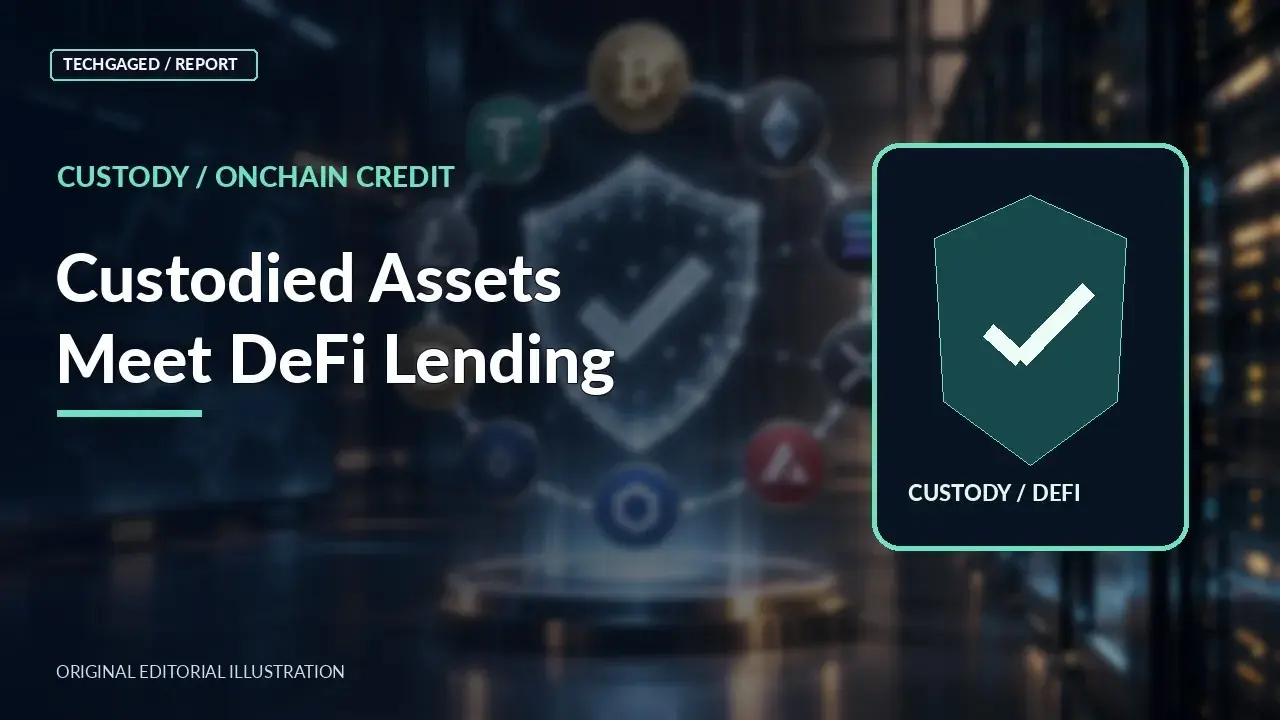
In its October 26 launch announcement, Chainlink named Anchorage Digital Bank as the first CustodySync partner. The product connects custody records, price data and loan events so that the custodian and a lending protocol can operate from consistent collateral and risk information. A launch partnership does not, however, imply that all Anchorage customers can already borrow against every asset or that every DeFi market supports the integration.
Institutional investors may be required by internal policy or regulation to keep holdings with a qualified custodian. Conventional DeFi lending often expects the user to transfer tokens directly into smart contracts. CustodySync attempts to reconcile those models by representing the custodied position onchain while the actual collateral stays under the custodian’s control.
Latest Stories
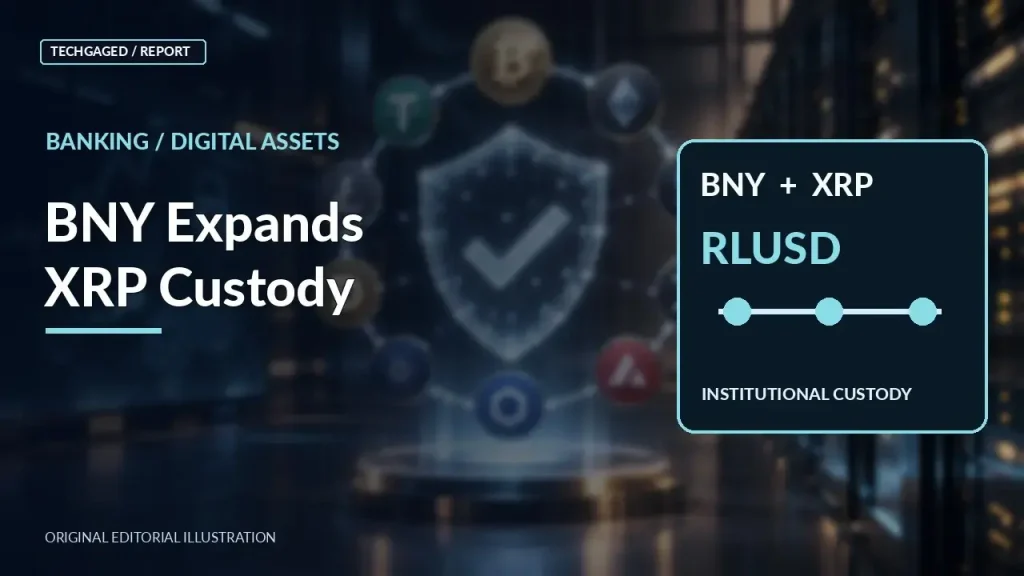
BNY Adds XRP and RLUSD Custody as Ripple Targets Tokenized Trade Finance

S&P Global Ratings Brings DeFi Vault Risk Assessments Onchain Through Chainlink

Polygon Open Money Stack Adds Solana for Full Bank-to-Stablecoin Payments
How collateral gets represented onchain
The architecture uses Chainlink Proof of Reserve to publish custody balances and transfer-restricted receipt tokens for positions placed into a lending market. The lending protocol uses Chainlink Data Feeds for valuation, while the custodian receives corresponding information through Data Streams. Chainlink’s Runtime Environment coordinates the updates between the two systems as borrowing, interest accrual and repayments occur.
The critical promise is not simply an onchain receipt. It is that the same collateral cannot be claimed multiple times in different lending arrangements without the relevant accounting and restrictions detecting the problem. Any deployment must demonstrate how claims are reserved, how balances are reconciled and how rights to collateral are enforced.
Anchorage’s Atlas Collateral Management is intended to serve as an institutional collateral agent. If a borrower’s position crosses the liquidation threshold, the agent can manage sale and settlement while the lending protocol receives synchronized updates.
This adds a different kind of dependency compared with fully onchain collateral. Protocol participants may rely on the custodian’s records, the agent’s enforcement and the correctness of data shared across systems. CustodySync does not make an offchain asset magically available for trustless liquidation by any anonymous third party.
Who bears the risk if systems disagree?
Price movements and delayed updates can create uncertainty about whether a loan is adequately secured. Chainlink says common pricing sources and automated synchronization reduce the risk that a custodian and protocol compute materially different loan-to-value ratios. That improvement still needs robust operational procedures when messages fail or markets move faster than collateral can be sold.
Institutional borrowers should ask what rights the receipt token represents, whether assets are segregated, what happens upon custodian insolvency, who can call for liquidation and whether the custodian can delay or refuse an action. DeFi depositors need to understand whether a claim depends on onchain liquidation or on contractual performance by a third party.
The launch reflects a direction of travel: DeFi increasingly incorporates regulated institutions rather than exclusively trying to replace them. Whether that makes lending safer depends on enforceable documentation, consistent accounting and transparent loss allocation. The project’s first meaningful metrics will be actual loans, collateral performance and evidence of reliable settlement under adverse conditions, not the theoretical size of assets held by custodians.
How do you rate this article?
Subscribe to our YouTube channel for crypto market insights and educational videos.






Join our Socials
Briefly, clearly and without noise – get the most important crypto news and market insights first.
Most Read Today
1
A Rare Ethereum Trend Is Emerging as Long-Term Holders Keep Taking Losses
2Bitcoin May Not Be Cheap Until $46,457, CVDD Warns
3Aave Liquidates Hacker’s Positions on Ethereum and Arbitrum
4Binance Hacker Moves Millions in ETH as Tornado Cash Laundering Risk Grows
5Binance Publishes Verifiable Reserves for 10 Tokens After $6.3B Hack
Latest







8
Also read
Similar stories you might like.
Defi
S&P Global Ratings Brings DeFi Vault Risk Assessments Onchain Through Chainlink
TechGaged | 2026-11-02
Industry
Hanwha Selects Chainlink for Global Tokenized Assets Ahead of Korea’s 2027 Rules
TechGaged | 2026-11-02
Defi
Chainlink Launches 24/7 Pricing for Tokenized Stocks as Aave Addresses Weekend Risk
TechGaged | 2026-11-02

Crypto News
Chainlink Expands in South Korea as LINK Tests $12 Support
Azeez | 2026-10-23

Crypto News
Four Payment Giants Tower Over LINK — Could Tokenization Change the Equation?
Azeez | 2026-10-14

Crypto News
Chainlink Hits 2026 High — CCIP 2.0 Could Give LINK’s Rally More Fuel
Azeez | 2026-09-29

Crypto News
Chainlink Keeps Stacking LINK — The Reserve Has Crossed $70M
Azeez | 2026-09-20

Crypto News
Over $16 Trillion in Payments Could Reach Onchain Rails — Chainlink Is Behind the Connection
Azeez | 2026-09-17

Crypto News
Chainlink Keeps Building Its Strategic Reserve: The Bigger Move May Be Ahead
Azeez | 2026-09-11

Crypto News
New Chainlink Wallets Are Surging — But One Metric Matters More Now
Azeez | 2026-09-10