



Samsung Wallet USDC Solana support editorial illustration
Samsung Wallet’s USDC Plan Reaches 82M Galaxy Devices, but Access Isn’t Automatic
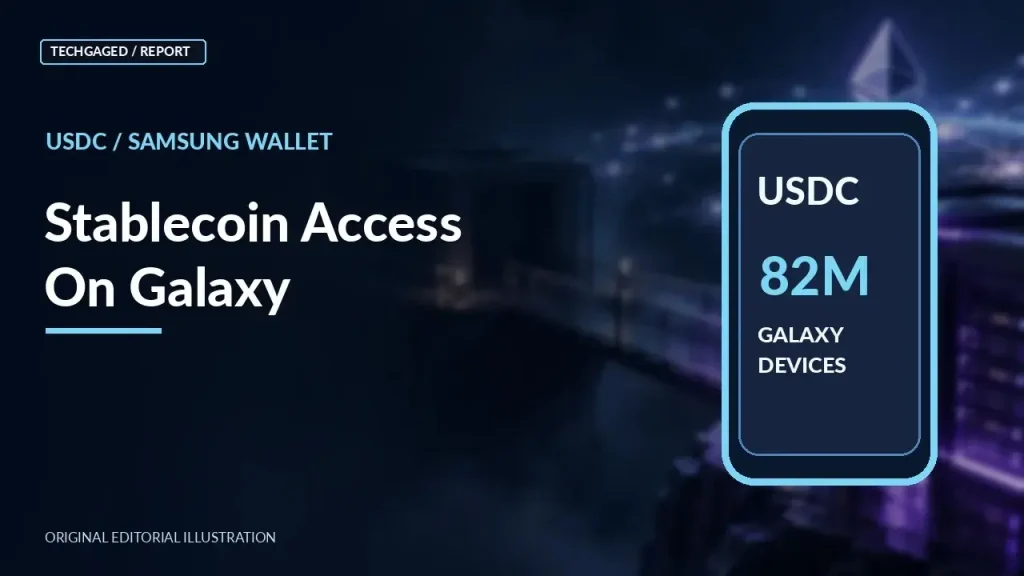
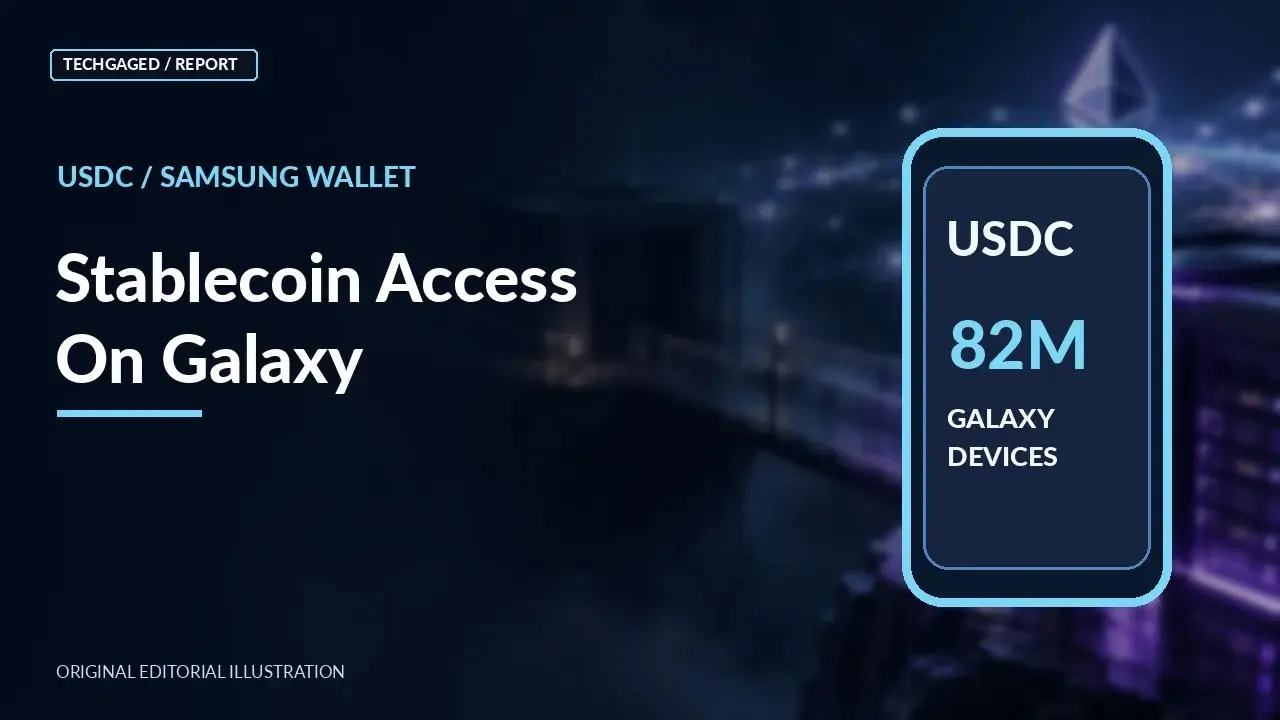
Samsung Wallet is expanding its role from storing payment credentials to supporting dollar-denominated stablecoin transfers, with a planned US rollout using USDC and Solana infrastructure. The announcement places a crypto payment rail inside a familiar consumer application, but the headline figure of 82 million Galaxy devices describes the addressable device base, not confirmed users of the new feature.
The Solana Foundation’s October 7 announcement says the integration is planned to begin during the final week of October 2026 in the United States. Coinbase’s October 8 description says it will support the USDC experience alongside a licensed partner, with balances custodied by Coinbase Prime Vault.
Both official statements describe an expansion of partnership and access, but neither establishes that every compatible phone has automatically received the service or completed a transfer. Regional eligibility, device software, account verification and availability determine who can use it.
Latest Stories
Arbitrum Offers ARB Rewards to Protocols Building USDG Stablecoin Liquidity
BNY Adds XRP and RLUSD Custody as Ripple Targets Tokenized Trade Finance
S&P Global Ratings Brings DeFi Vault Risk Assessments Onchain Through Chainlink
A familiar interface changes the adoption equation
Many cryptocurrency payment products require users to install a separate wallet, acquire the token, manage blockchain transaction fees and navigate network details. Building the experience into Samsung Wallet could reduce some of those steps, especially when fiat conversion is integrated into the product flow.
Solana is the underlying network for the cross-border transfer component, while USDC serves as the dollar-linked asset. Those two roles should not be confused. Users are not necessarily buying SOL as an investment when they send a dollar-denominated stablecoin through a wallet interface.
Coinbase’s participation introduces another distinction. A USDC balance held through a custodial service has different risks and recovery arrangements from self-custodied tokens controlled directly by a recovery phrase. Customers need to understand which entity holds their assets and what consumer protection or account restriction policies apply.
Why 82 million is not a transaction count
The 82 million-device statistic shows potential reach. Adoption requires active customers, verified accounts, supported destinations and convincing economics relative to bank transfers or existing payment apps. There is currently no basis in these statements for claiming that 82 million people have transferred USDC or that billions in remittances already moved through Samsung Wallet.
A cross-border transfer also includes the payout route at the recipient’s location. Instant blockchain settlement can be followed by a slower cash-out process, pricing differences or compliance review. The end-to-end experience matters more than the confirmation time of one blockchain transaction.
Users should compare fees, exchange rates, payout availability and dispute handling. Stablecoin payments can be efficient without having chargeback rights identical to a card purchase or the deposit protection of a bank balance.
This rollout is important because it embeds stablecoin access in a mainstream device ecosystem rather than asking customers to learn a separate crypto product. Its real-world importance will be established by actual user adoption, delivered corridors and transparent payment costs.
How do you rate this article?
Subscribe to our YouTube channel for crypto market insights and educational videos.






Join our Socials
Briefly, clearly and without noise – get the most important crypto news and market insights first.
Most Read Today
1
OKX Adds Five Stock Perpetuals as Crypto Exchanges Push Further Into TradFi
2A Rare Ethereum Trend Is Emerging as Long-Term Holders Keep Taking Losses
3Binance Publishes Verifiable Reserves for 10 Tokens After $6.3B Hack
4Bitcoin May Not Be Cheap Until $46,457, CVDD Warns
5Fake SKR Claim App Reaches Solana Mobile Store After Publishing Portal Breach
Latest



8
Also read
Similar stories you might like.
Security
Coinbase Says Smaller AI Model Beat Frontier LLMs at Fraud Detection in Internal Tests
TechGaged | 2026-11-02
Industry
Polygon Open Money Stack Adds Solana for Full Bank-to-Stablecoin Payments
TechGaged | 2026-11-02
Altcoins
Coinbase Adds Ripple’s RLUSD on XRP Ledger, Base and Ethereum
TechGaged | 2026-11-02
Regulation
Ireland Fines Coinbase €3.25M for Safeguarding Failures: Regulator Details Underfunded Accounts
TechGaged | 2026-11-02
Industry
Coinbase Prediction Markets Cross $200M Run Rate as Q3 Reveals Softer Crypto Trading
TechGaged | 2026-11-02
Blockchain
Circle Opens CCTP to More Than USDC: A New Route for Issuer-Controlled Tokens
TechGaged | 2026-11-02
Regulation
Circle Wants Qualifying Stablecoins Treated as Cash Under SEC Proposal
TechGaged | 2026-11-02
Blockchain
Akash Plans One-Way AKT Migration to Solana With a Two-Year Claim Window
TechGaged | 2026-11-02
Crypto News
Solana’s Real-World Assets Surge to a Record — Is a Bigger Growth Phase Ahead?
Azeez | 2026-10-30
Crypto News
What Would Solana’s Consensus Look Like in a Post-Quantum World?
Azeez | 2026-10-28