



Polygon supports Solana stablecoin payments editorial illustration
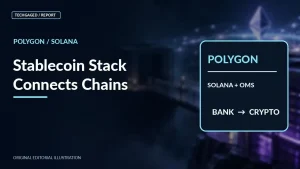
Polygon has expanded its Open Money Stack payments infrastructure to support Solana, allowing businesses operating on that network to connect conventional bank funding with crypto balances and bank payouts through a unified workflow. The launch reflects a shift from competing only on blockchain performance toward providing end-to-end payment operations.
In its October 29 announcement, Polygon says Solana-based businesses can accept funds through bank transfers, cards, cash or crypto, convert between fiat and digital assets, store funds in supported custodial or embedded wallets, and route payments across Solana, Polygon and other networks.
The product is not evidence that a single bank or exchange processes all payments or that every funding method works in every country. Available services depend on the participating partners, local laws, identity verification and supported chains.
Latest Stories
Aviva Tokenizes a £22B Money Market Fund’s Sterling Share Class on XRP Ledger
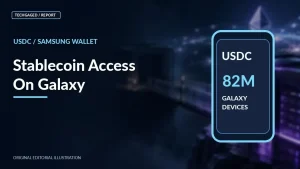
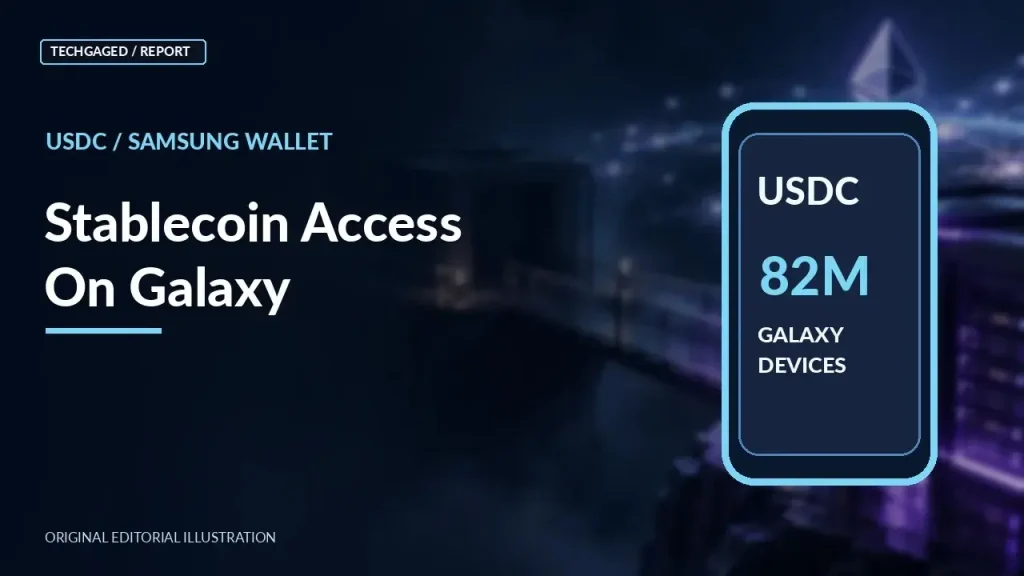
Samsung Wallet’s USDC Plan Reaches 82M Galaxy Devices, but Access Isn’t Automatic
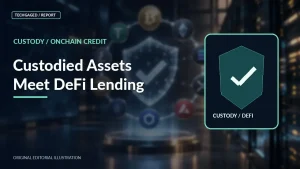
Chainlink and Anchorage Bring Custodied Crypto Into DeFi Lending Without Moving Collateral
Payments require more than a fast blockchain
Moving stablecoins across a blockchain is only one part of a commercial payment. A customer may deposit fiat, a provider must create the corresponding balance, the business may route it between chains and finally a recipient needs funds in a bank account or another usable form.
Polygon OMS attempts to package these stages behind a common interface so developers do not have to coordinate separate providers and cross-chain bridges for every transaction path. A Solana-first application could therefore preserve its preferred settlement network while gaining fiat infrastructure through other parts of the system.
The announcement does not mean Solana and Polygon merge their networks or become a single ledger. They remain separate chains with separate consensus and security models, connected through specific routing arrangements.
What businesses must still evaluate
Operational convenience should be assessed against costs, custody obligations and failure handling. If a bank funding leg is reversed after a crypto transfer becomes final, the provider needs a clear policy for managing that mismatch.
Exchange rates, network fees, service charges and local payout costs can also affect whether a digital rail is cheaper than traditional alternatives. A fast blockchain confirmation cannot guarantee an instant arrival at a recipient’s bank.
Companies should examine whether payment instructions can be suspended, how balances are reconciled across networks, which entities hold funds and whether restricted geographies are filtered correctly. Regulatory authorization may apply to a service provider rather than to the blockchain protocol itself.
The industry-wide implication is a more cooperative model among competing networks: businesses may choose one chain for an application while using another company’s infrastructure to access cash and liquidity. The proof of success will be actual commercial transactions, reliable payout completion and transparent total costs.
How do you rate this article?
Subscribe to our YouTube channel for crypto market insights and educational videos.






Join our Socials
Briefly, clearly and without noise – get the most important crypto news and market insights first.
Most Read Today
1
A Rare Ethereum Trend Is Emerging as Long-Term Holders Keep Taking Losses
2Bitcoin May Not Be Cheap Until $46,457, CVDD Warns
3Aave Liquidates Hacker’s Positions on Ethereum and Arbitrum
4Binance Hacker Moves Millions in ETH as Tornado Cash Laundering Risk Grows
5Bitcoin Is Now Less Volatile Than Nvidia, Says Bitwise CIO
Latest





8
Also read
Similar stories you might like.
Industry
Samsung Wallet’s USDC Plan Reaches 82M Galaxy Devices, but Access Isn’t Automatic
TechGaged | 2026-11-02
Regulation
EU Crypto Firms Face Deadline to Unwind Non-MiCA Stablecoin Exposure
TechGaged | 2026-11-02
Regulation
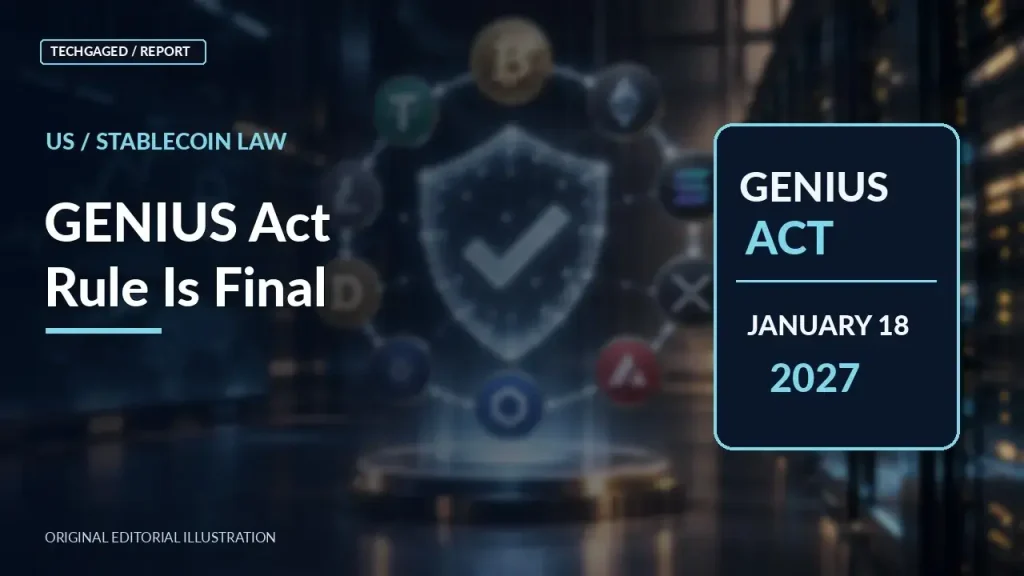
US Stablecoin Rule Is Final, but Key GENIUS Act Requirements Start January 18
TechGaged | 2026-11-02
Regulation
Ripple Wins Final US Trust Bank Approval, but RLUSD Issuer Remains Unchanged
TechGaged | 2026-11-02
Blockchain
Akash Plans One-Way AKT Migration to Solana With a Two-Year Claim Window
TechGaged | 2026-11-02
Crypto News
Solana’s Real-World Assets Surge to a Record — Is a Bigger Growth Phase Ahead?
Azeez | 2026-10-30
Crypto News
What Would Solana’s Consensus Look Like in a Post-Quantum World?
Azeez | 2026-10-28
Crypto News
Altcoin Speculation Retreats From September Highs: What It Means for Buyers
Azeez | 2026-10-27

Crypto News
SOL Gets a Major Network Upgrade as Alpenglow Goes Live
Azeez | 2026-10-22
Crypto News
Solana Could Become the World’s Fastest Blockchain After This Upgrade
Azeez | 2026-10-14