





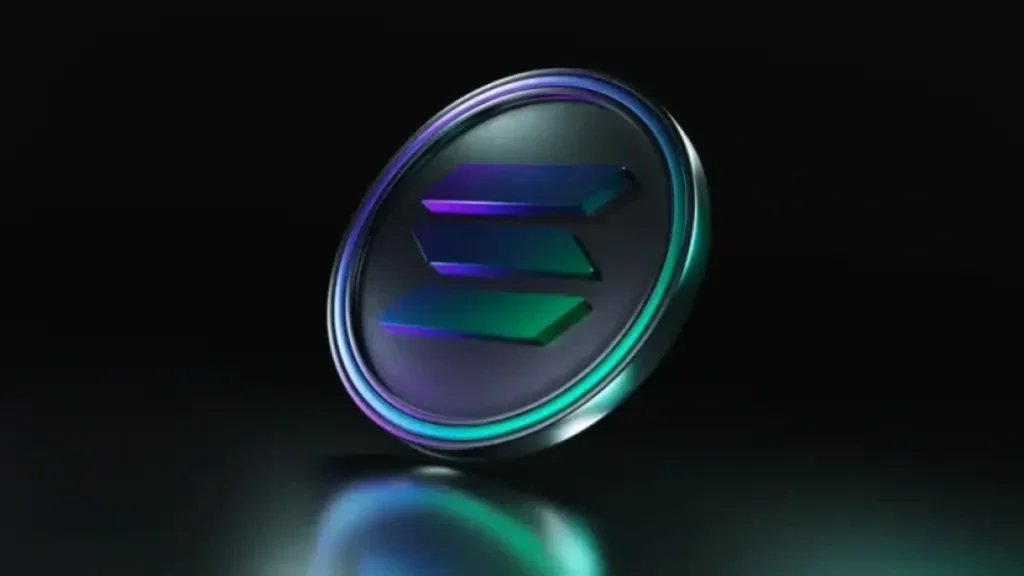
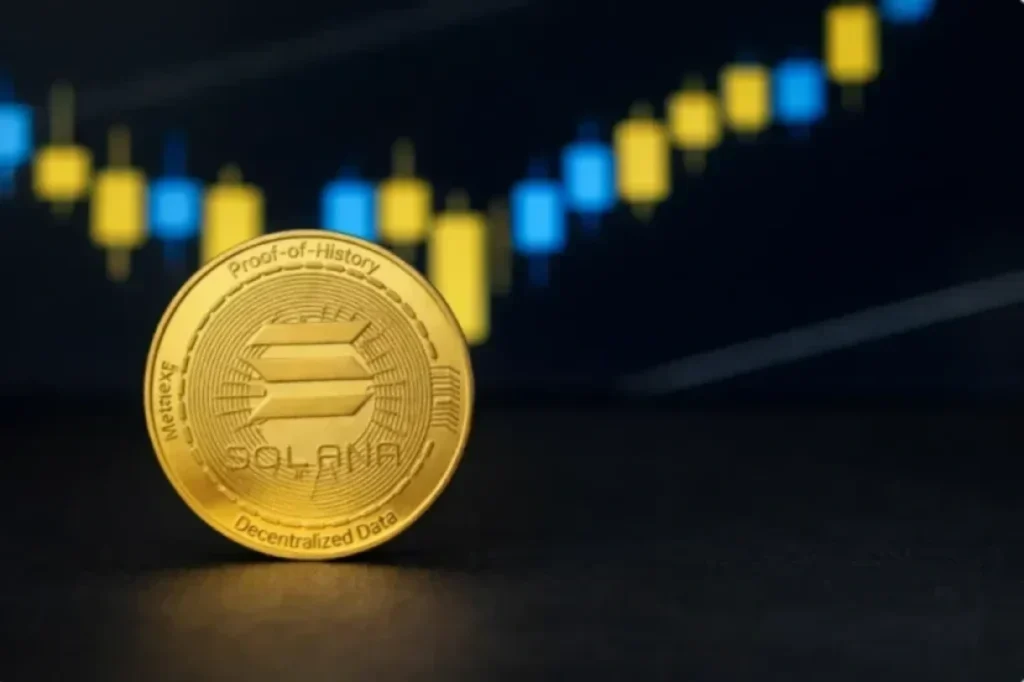
Solana emblem leaning on a dark setting. Source: TechGaged/Shutterstock.
SOL gets a major network upgrade as Alpenglow goes live. Alpenglow is Solana’s new consensus system, which decides how validators agree on blocks.
It went live on mainnet at the start of epoch 1064, around 13:36 UTC on 21 October 2026. SIMD-0326 proposed the change.
Anza, the core developer behind it, targets finality of about 150 milliseconds, down from 12.8 seconds.
Latest Stories
Bitcoin Is Back Above Treasury Cost Basis — But the Biggest Buyers Remain Cautious
Ethereum’s ETF Battle Intensifies as BlackRock Outflows Meet Grayscale Inflows
ZEC Surges Toward $1,300 as Zcash’s Major Upgrade Approaches
What Is Alpenglow?
The first phase ships a voting system called Votor. It replaces TowerBFT. Validators no longer send votes as ordinary on-chain transactions. Votes move off-chain and bundle into certificates that lock in blocks.
Rotor, a block distribution redesign, comes later and has no date. Solana also cut slot times from 400ms to 200ms earlier in October.
Tokenized markets could benefit from faster settlement, as Europe’s tokenized collateral tests show.
Why Does the TPS Chart Show Zero Votes?
Total TPS and true TPS both read 2,053. Vote TPS reads 0. Before the switch, votes made up about 62% of everything Solana processed, Solana Compass data shows.
That equals roughly 263 million votes a day. Headline transaction counts will now look much lower, even though user activity is unchanged.
Validators pay a flat 0.8 SOL per epoch instead, and that fee is burned. Other chains see activity shifts too, as Cardano DEX volume jumped 143% in a week.
SOL Cools Near $104
At about 09:55 UTC on 22 October 2026, SOL traded at $103.94. That is up 0.9% over seven days. The BTC pair stood at 0.00127141.
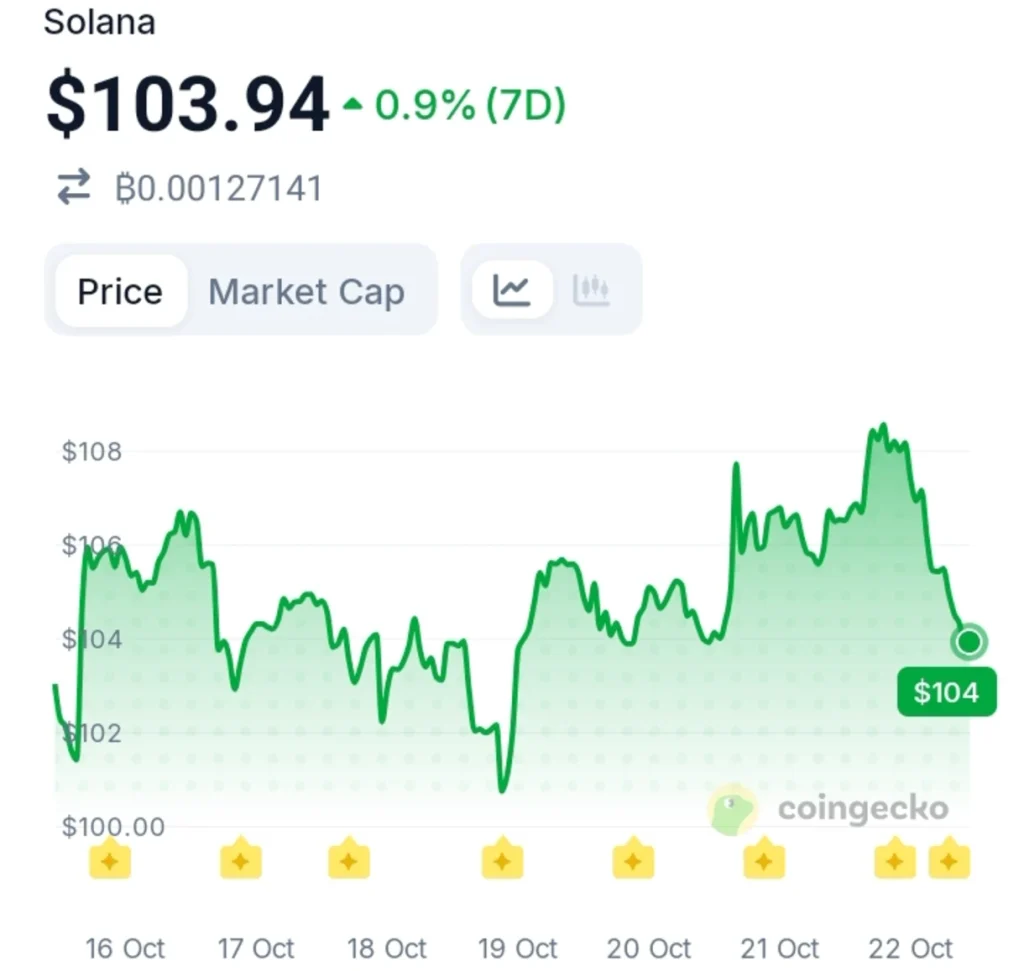
The seven-day chart opens near $103 on 16 October. Price rose to about $106.70 that day, then fell to a low near $100.70 on 19 October.
A rebound carried SOL to about $107.70 on 21 October. A peak near $108.50 came early on 22 October. Sellers then took over, and price eased back toward $104.
What Mainnet Must Still Prove
The 150ms figure is Anza’s target. The Solana Foundation’s dashboard showed a single reading of 202ms on 21 and 22 October. One reading is not a sustained average.
Network upgrades also carry security risk, as shown when the Neutron exploit left the Cosmos community weighing the return of 1.227 million ATOM. Speed claims count once the measured numbers settle.
Disclaimer:
This article is for informational purposes only and does not constitute financial, investment, or trading advice. The views expressed are based on publicly available data, market observations, and the author’s interpretation at the time of writing. Cryptocurrency markets are highly volatile and unpredictable, and past performance or current technical setups do not guarantee future results. Readers should conduct their own research and consult with a qualified financial advisor before making any investment decisions. TechGaged does not accept liability for any losses incurred based on the information presented.
How do you rate this article?
Subscribe to our YouTube channel for crypto market insights and educational videos.






Join our Socials
Briefly, clearly and without noise – get the most important crypto news and market insights first.
Most Read Today
1
XRP Whale Outflows Hit a 5-Year Low — Could This Signal a Major Shift?
2After the Brutal Flash Crash, Is XRP’s Next Big Move a Trap or a Turnaround?
3JPMorgan Ranks Bitcoin Above Stocks and Gold — But Warns of 55% Volatility
4Record ETH Staking Meets Falling Yields: What Does It Mean for Price?
5Musk Predicts The Year Robots Will Replace Our Jobs
Latest


8
Also read
Similar stories you might like.
Crypto News
Bitcoin Is Back Above Treasury Cost Basis — But the Biggest Buyers Remain Cautious
Azeez | 2026-10-22
Crypto News
Ethereum’s ETF Battle Intensifies as BlackRock Outflows Meet Grayscale Inflows
Azeez | 2026-10-22
Crypto News
After the Brutal Flash Crash, Is XRP’s Next Big Move a Trap or a Turnaround?
Azeez | 2026-10-21
Crypto News
Bitcoin’s Biggest Selling Signal in a Year Is Fading: Could BTC Recover?
Azeez | 2026-10-20
Crypto News
Bitcoin’s October 2026 Price Battle — Where Buyers and Sellers Could Take Control
Azeez | 2026-10-14
Crypto News
Solana Could Become the World’s Fastest Blockchain After This Upgrade
Azeez | 2026-10-14
Crypto News
Ethereum Exchange Liquidity Hits a 7-Month Low — Bulls Are Watching Closely
Azeez | 2026-10-12
Crypto News
Hong Kong Adds Another Route Into SOL — Will It Attract Fresh Capital?
Azeez | 2026-10-12

Blockchain
Wall Street’s Blockchain Switch Is Arriving: DTCC Tokenization Service Targets October Launch
TechGaged | 2026-10-04
Beginners
What a Wallet Address Tells the Person You Sent It To
Rokas | 2026-10-01