
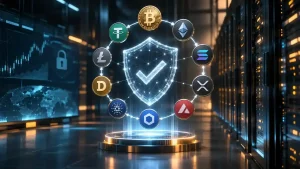


S&P Chainlink DeFi vault risk assessments editorial visual
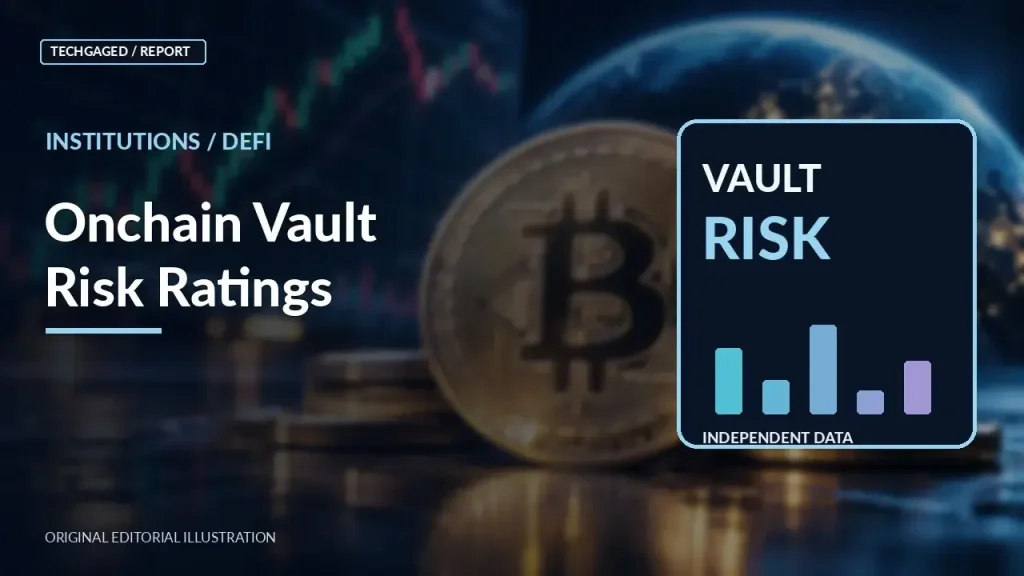
S&P Global Ratings Brings DeFi Vault Risk Assessments Onchain Through Chainlink
Independent vault risk assessments from S&P Global Ratings are now accessible through Chainlink infrastructure, offering a new way for decentralized lending platforms and investors to incorporate third-party analysis into onchain decision-making. The development attempts to address a long-running gap between automated crypto lending and conventional credit-risk assessment.
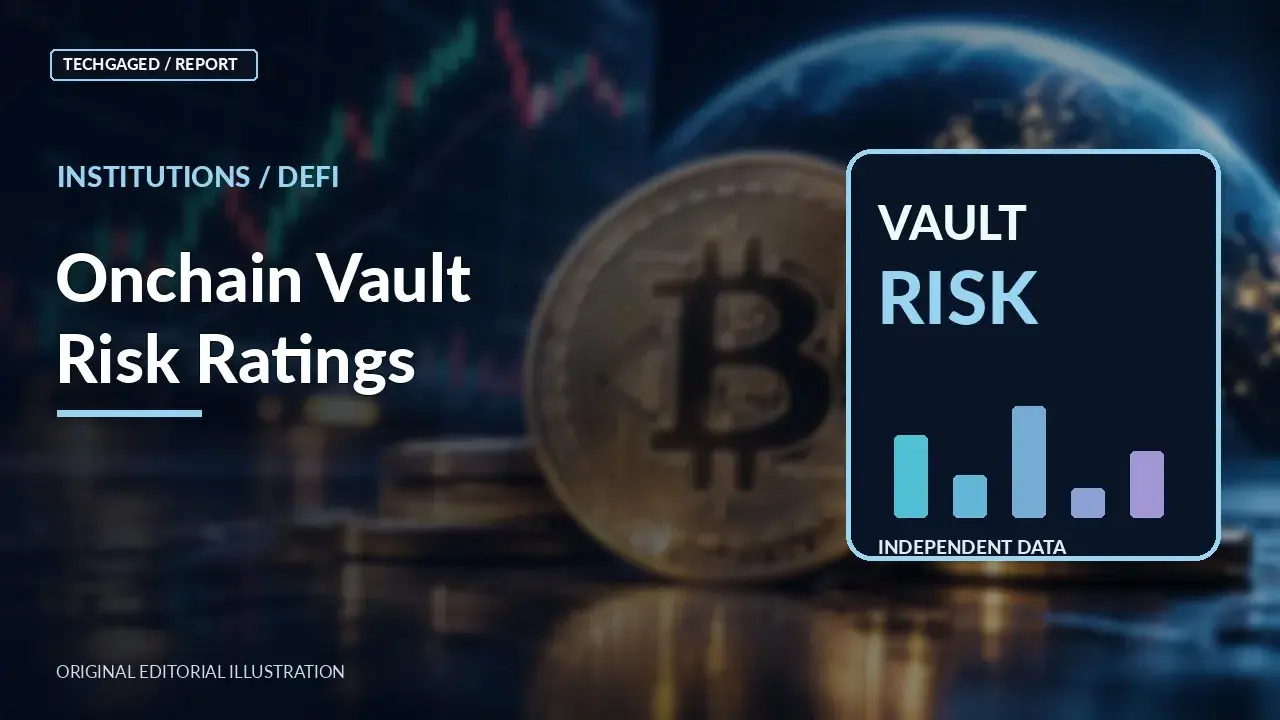
In an October 28 release distributed by Chainlink, the companies announced a live integration of S&P’s Vault Risk Assessment data, intended to help users evaluate risks in a DeFi lending-vault market they describe as approximately $10 billion. This is an information service, not a guarantee that a rated vault will meet all withdrawal requests or preserve deposit principal.
DeFi vaults often aggregate deposits and allocate capital according to strategies chosen by managers or encoded in smart contracts. The headline yield may be visible continuously, but a depositor still needs to evaluate underlying collateral, loan concentration, oracle dependence and the governance powers that can change how assets are deployed.
Latest Stories
Robinhood and Ripple Deepen RLUSD Ties, With App Rollout Still Planned for 2026
Circle Match Gives Institutions an Hourly USDC Mint-and-Redeem Auction
Solana Publishes Open-Source Delivery-versus-Payment Program With JPMorgan Input
Risk data can improve decisions without replacing due diligence
Making assessments available onchain can allow applications to display them alongside a vault’s live balance, borrowing rates and risk settings. Some institutional managers may also use the data in automated eligibility or exposure controls, provided the data format and updates meet their own governance requirements.
The potential improvement is contextual rather than magical. An independent assessment can identify weaknesses that a simple total-value-locked number hides, but the assessment may rely on assumptions, snapshots and methodology choices that do not capture a fast-moving attack or unexpected market freeze.
There is also a timing issue. Onchain protocols can change collateral parameters, create new positions or experience withdrawals in minutes. Risk scores prepared less frequently may become stale just as a lending market becomes stressed. Integrators should examine when a score was issued, how it is updated and whether the model is applicable to the current vault structure.
Another distinction is between S&P’s Vault Risk Assessment and its traditional public-debt credit ratings. They may serve different purposes and should not be conflated. A user should consult the published definition and scale of the particular assessment before treating a displayed indicator as a familiar letter-grade bond rating.
Why the integration matters for institutional DeFi
Professional investors often require independent research before approving exposure to a particular strategy. If this information is available in a standardized form through an oracle network, it becomes easier to link research and trading controls without having to rebuild proprietary data pipelines for every application.
However, institutional standards cannot be met solely by installing a data feed. Legal ownership of assets, identity checks, collateral custody and loss-allocation rules may still determine whether a vault is investable. A transparent rating does not override a vulnerable smart contract or an illiquid liquidation market.
For individual investors, the lesson is to compare multiple indicators: collateral concentration, liquidation thresholds, oracle reliability, smart-contract change controls and historical losses, alongside any external assessment. Our analysis of DeFi TVL explains why nominal deposits cannot stand in for a complete risk picture.
The announcement is an incremental advance in market infrastructure, not a regulatory stamp of approval for the whole sector. Its success should be measured by how timely and meaningful the assessments prove in real lending decisions.
How do you rate this article?
Subscribe to our YouTube channel for crypto market insights and educational videos.






Join our Socials
Briefly, clearly and without noise – get the most important crypto news and market insights first.
Most Read Today
1
OKX Adds Five Stock Perpetuals as Crypto Exchanges Push Further Into TradFi
2A Rare Ethereum Trend Is Emerging as Long-Term Holders Keep Taking Losses
3Binance Publishes Verifiable Reserves for 10 Tokens After $6.3B Hack
4Bitcoin May Not Be Cheap Until $46,457, CVDD Warns
5Circle Wants Qualifying Stablecoins Treated as Cash Under SEC Proposal
Latest

8
Also read
Similar stories you might like.
Defi
Chainlink and Anchorage Bring Custodied Crypto Into DeFi Lending Without Moving Collateral
TechGaged | 2026-11-02
Industry
Hanwha Selects Chainlink for Global Tokenized Assets Ahead of Korea’s 2027 Rules
TechGaged | 2026-11-02
Defi
Chainlink Launches 24/7 Pricing for Tokenized Stocks as Aave Addresses Weekend Risk
TechGaged | 2026-11-02
Crypto News
Chainlink Expands in South Korea as LINK Tests $12 Support
Azeez | 2026-10-23

Crypto News
Four Payment Giants Tower Over LINK — Could Tokenization Change the Equation?
Azeez | 2026-10-14
Crypto News
Chainlink Hits 2026 High — CCIP 2.0 Could Give LINK’s Rally More Fuel
Azeez | 2026-09-29
Crypto News
Chainlink Keeps Stacking LINK — The Reserve Has Crossed $70M
Azeez | 2026-09-20
Crypto News
Over $16 Trillion in Payments Could Reach Onchain Rails — Chainlink Is Behind the Connection
Azeez | 2026-09-17
Crypto News
Chainlink Keeps Building Its Strategic Reserve: The Bigger Move May Be Ahead
Azeez | 2026-09-11
Crypto News
New Chainlink Wallets Are Surging — But One Metric Matters More Now
Azeez | 2026-09-10