


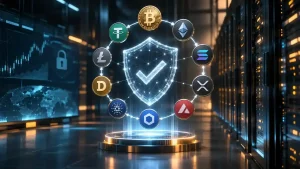




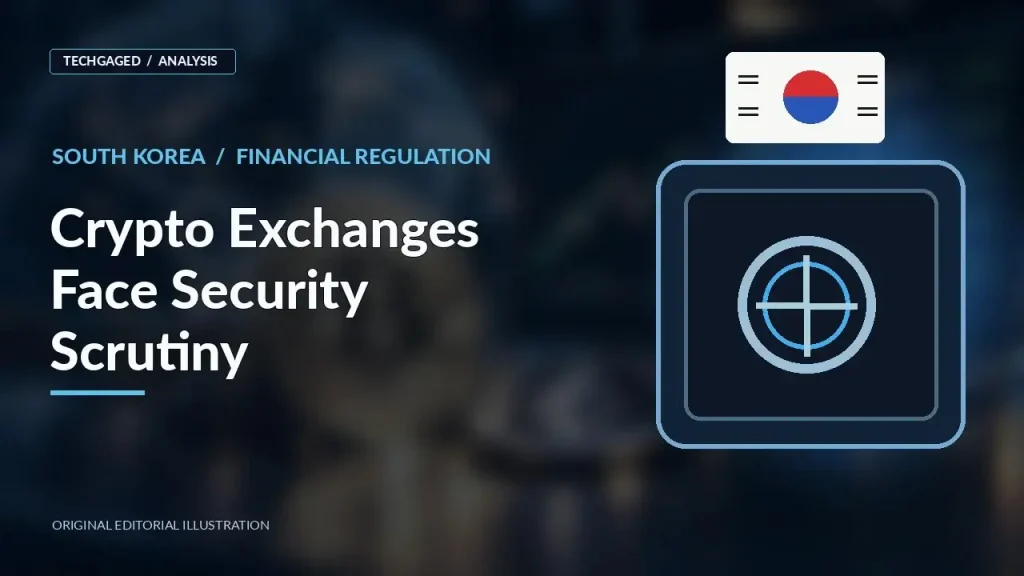
South Korea cryptocurrency exchange security scrutiny original editorial illustration
South Korea Urges Crypto Exchanges to Raise Cold Wallet Holdings After Binance Hack
South Korea’s top financial regulator has convened an emergency meeting with domestic cryptocurrency businesses and oversight bodies following the $6.3 billion attack on Binance, urging exchanges to strengthen cold-wallet holdings, withdrawal controls and procedures for sharing suspicious-access alerts.
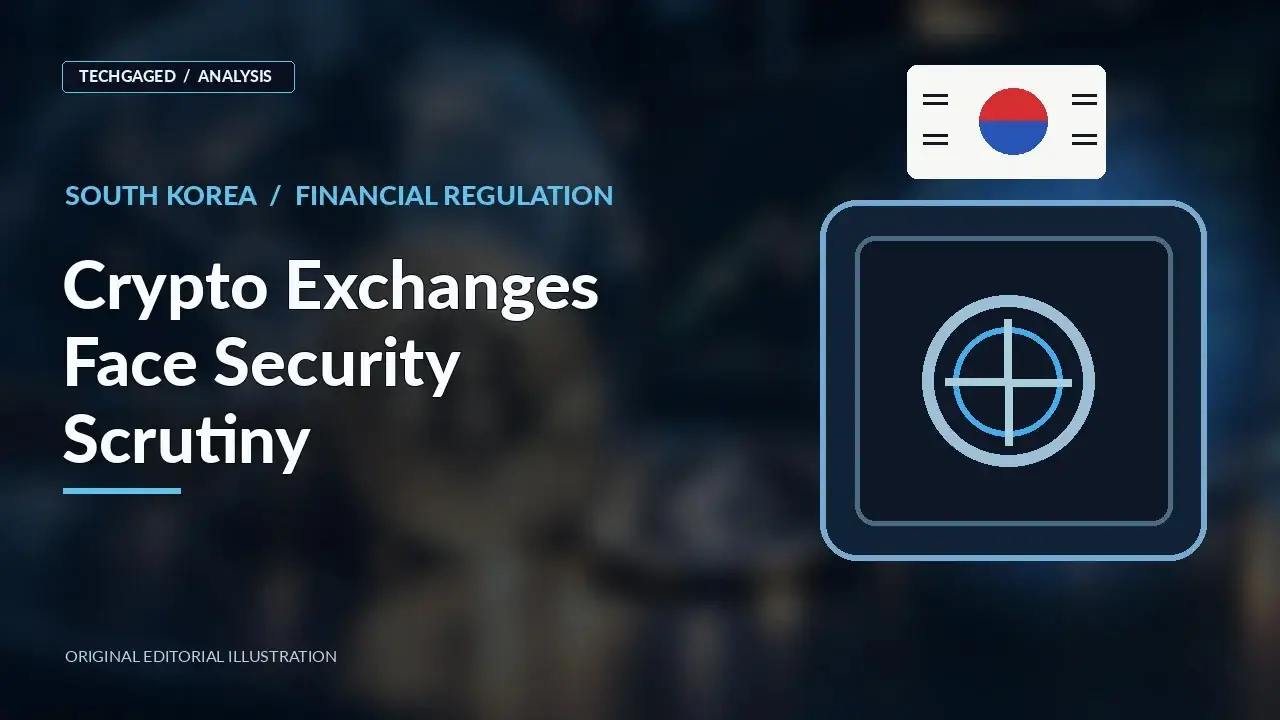
The Financial Services Commission (FSC) said on November 2 that it had gathered representatives of the Financial Supervisory Service, the Financial Security Institute, the Digital Asset eXchange Alliance (DAXA) and major domestic virtual-asset operators. The session was designed to assess the impact of the overseas breach on the Korean market and test the readiness of local trading platforms to respond to a comparable incident.
Rather than announcing a completed enforcement action or a new numerical custody requirement, the FSC described an urgent review and a series of measures operators should implement immediately where possible. That distinction matters: the statement is a supervisory warning and coordination response, not evidence that Korean platforms have already increased cold-wallet balances by a particular percentage.
Latest Stories
Ireland Fines Coinbase €3.25M for Safeguarding Failures: Regulator Details Underfunded Accounts

Coinbase Prediction Markets Cross $200M Run Rate as Q3 Reveals Softer Crypto Trading
Lisk Chain Shuts Down on November 2: What Happens to Stranded Crypto Assets?
Cold storage moves to the center of the response
The regulator’s four priorities are greater use of cold storage, continuous monitoring of deposits and withdrawals together with additional response personnel, rapid reporting and information sharing when abnormal access is detected, and stronger reserve provisions to absorb a possible security loss.
Cold wallets are signing environments whose keys are kept away from permanently internet-connected systems. They can sharply reduce the amount of cryptocurrency directly exposed to online intrusions, but they are not a complete substitute for secure operational procedures. An attacker who compromises an exchange’s approval workflow, signing permissions or staff devices can still create problems even when some assets remain offline.
The FSC’s statement specifically referenced access controls, administrators’ privileges and transaction-signing and approval processes for wallets. Those details show that the regulator is looking beyond the simple hot-wallet versus cold-wallet distinction. The integrity of the system that authorizes a transfer matters as much as where its assets are stored.
The review follows Binance’s October 30 disclosure that unauthorized withdrawals began on October 29 UTC and affected approximately $6.3 billion of tokens. Binance said a preliminary investigation pointed to possible compromise of an employee laptop and subsequent access to service infrastructure. The exchange has not yet published a final forensic post-mortem, so the complete technical explanation remains provisional.
What the warning means for exchange customers
For customers in South Korea, the immediate significance is increased regulatory attention to platform controls and financial buffers, rather than a confirmed change to individual account terms. The FSC did not publish exchange-by-exchange findings, custody percentages, or a timetable for new mandatory rules in the announcement.
At the same time, the regulator’s focus on withdrawal surveillance is relevant well beyond South Korea. Crypto custody security is not exclusively about blocking theft. Firms also need to detect anomalous signing activity quickly, suspend compromised routes without unnecessarily disrupting other services and communicate accurately when withdrawals can resume.
Customers assessing the safety of any custodial trading platform should ask what percentage of reserves is held in offline storage, how sensitive withdrawals are approved, whether access permissions are independently reviewed, and how losses would be covered. Even a published proof-of-reserves report cannot answer all of those questions.
The Korean response is one of the first concrete supervisory reactions documented in an official statement following the Binance breach. Its near-term test will be whether exchanges can demonstrate improved controls in practice—not merely announce greater security awareness. The FSC said it would continue coordinating with relevant agencies and industry participants to prevent additional intrusions and contain potential losses.
How do you rate this article?
Subscribe to our YouTube channel for crypto market insights and educational videos.






Join our Socials
Briefly, clearly and without noise – get the most important crypto news and market insights first.
Most Read Today
1
Elon Musk’s SpaceX Unveils Massive Bitcoin Treasury Ahead of IPO
2A Rare Ethereum Trend Is Emerging as Long-Term Holders Keep Taking Losses
3Aave Liquidates Hacker’s Positions on Ethereum and Arbitrum
4Bitcoin Is Now Less Volatile Than Nvidia, Says Bitwise CIO
5Bitcoin May Not Be Cheap Until $46,457, CVDD Warns
Latest






8
Also read
Similar stories you might like.
Regulation
South Korea Seeks Blocks on Two Unregistered Crypto Services After DAXA Referrals
TechGaged | 2026-11-02
Security
Binance Publishes Verifiable Reserves for 10 Tokens After $6.3B Hack
TechGaged | 2026-11-02

Crypto News
Chainlink Expands in South Korea as LINK Tests $12 Support
Azeez | 2026-10-23
Crypto News
XRP Whale Outflows Hit a 5-Year Low — Could This Signal a Major Shift?
Azeez | 2026-10-20
Crypto News
Ethereum Exchange Liquidity Hits a 7-Month Low — Bulls Are Watching Closely
Azeez | 2026-10-12
Blockchain
South Korea’s KOMSCO Tests Full Local-Currency Settlement on the OP Stack
TechGaged | 2026-10-04
Crypto News
Binance’s Bitcoin Reserves Plunge — Are Late Buyers Finally Feeling FOMO?
Azeez | 2026-09-28
Crypto News
Bitcoin Clears Its Biggest Leverage Test Since 2023
Azeez | 2026-09-07
Crypto News
500 Million XRP Leaves Binance: A Major Supply Shift Unfolds
Azeez | 2026-09-02

Crypto News
Ethereum Faces One of Its Most Extreme Sell-Side Readings on Binance
Azeez | 2026-08-29