





Chainlink vault adapters eighty chains editorial illustration
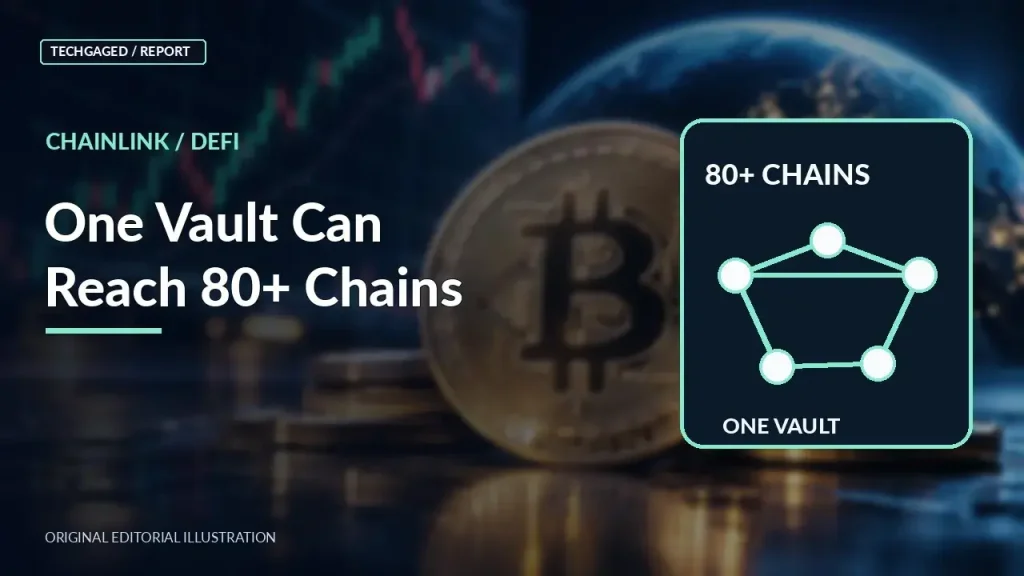
Chainlink has released CCIP Vault Adapters, a framework designed to let a decentralized-finance vault receive deposits from users on more than 80 supported blockchains while maintaining its principal strategy and accounting on one network. The product aims to address a practical growth problem for onchain funds: users and assets are spread across many chains, but liquidity and risk controls often work best when centralized within one vault.
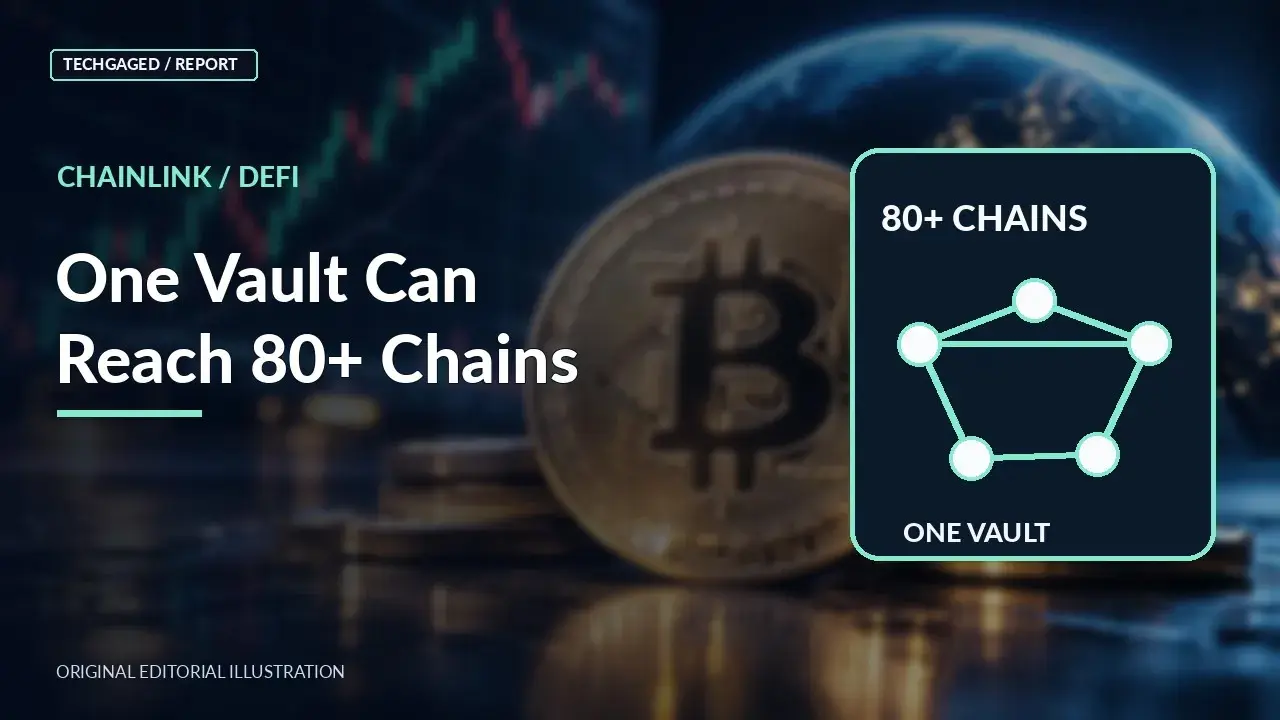
In its October 8 technical announcement, Chainlink said the solution supports standard ERC-4626 vaults and can be extended to more complex structures. Named adopters and integrators include Aave, Lombard, Venus, Veda and other asset managers and infrastructure providers.
Not every one of the 80-plus networks necessarily supports every token, vault or redemption pattern. Each usable route depends on deployed adapters, asset availability and the conditions of the target strategy.
Latest Stories

Polygon Automates Stablecoin Payouts With Recipient and Budget Controls

Coinbase Rebuilds Account Permissions for Businesses Without Replacing Its Retail Core

Euro-to-Dollar Stablecoin Swaps Go Live on Polygon Through Monerium and Frax
Why single-chain accounting still matters
A conventional DeFi vault might be deployed on Ethereum while a potential customer holds an eligible token on another network. Without an integrated path, the user must bridge funds, manage gas on the destination and separately deposit into the vault. This creates friction and several opportunities for mistakes.
CCIP Vault Adapters attempt to combine the cross-chain movement and vault deposit into one coordinated transaction flow. The underlying strategy can remain on a home chain, preserving its accounting, permissions and risk parameters rather than creating several semi-independent vault copies.
From the perspective of the fund manager, this can reduce fragmented liquidity. From the perspective of the user, the key question becomes how funds are handled if a cross-chain message arrives late, reverts or becomes stuck after the source transfer.
Cross-chain simplicity does not remove security risk
The announcement describes failed-message handling and a path to recover funds in defined cases, but recovery procedures are still a critical part of due diligence. Users should know what happens if the destination vault pauses, if the selected token is not accepted or if an adapter changes permissions.
The standard ERC-4626 interface can make yield-bearing vault interactions more consistent, yet it does not guarantee that the underlying strategy is safe. A lending, credit or tokenized-asset vault may incur losses even if its cross-chain deposit mechanism operates perfectly.
Providers may also choose to make receipt tokens transferable between chains. That convenience introduces the need to reconcile where those shares are represented, prevent duplicate claims and maintain any legal restrictions on holding them.
For a practical investor, the safeguards are familiar: check the exact vault and asset contract, identify the chain where the strategy operates, understand withdrawal mechanics and confirm the route supports the relevant token version. Our pre-bridge checklist remains relevant even when the bridging step is hidden in one click.
The major achievement would be broad distribution without sacrificing the clarity of ownership and risk controls. The product is live infrastructure; its long-term value will be determined by successful flows, honest error handling and whether more users actually participate in sustainable vault strategies.
How do you rate this article?
Join our Socials
Briefly, clearly and without noise – get the most important crypto news and market insights first.
Most Read Today
1
Ripple Wins Final US Trust Bank Approval, but RLUSD Issuer Remains Unchanged
2Hanwha Selects Chainlink for Global Tokenized Assets Ahead of Korea’s 2027 Rules
3Circle Opens CCTP to More Than USDC: A New Route for Issuer-Controlled Tokens
4OKX Adds Five Stock Perpetuals as Crypto Exchanges Push Further Into TradFi
5A Rare Ethereum Trend Is Emerging as Long-Term Holders Keep Taking Losses
Latest






8
Also read
Similar stories you might like.
Regulation
Abu Dhabi Asset Manager Uses Chainlink to Put Compliance Checks Into Token Transfers
TechGaged | 2026-11-02
Defi
S&P Global Ratings Brings DeFi Vault Risk Assessments Onchain Through Chainlink
TechGaged | 2026-11-02
Defi
Chainlink and Anchorage Bring Custodied Crypto Into DeFi Lending Without Moving Collateral
TechGaged | 2026-11-02
Industry
Hanwha Selects Chainlink for Global Tokenized Assets Ahead of Korea’s 2027 Rules
TechGaged | 2026-11-02
Defi
Chainlink Launches 24/7 Pricing for Tokenized Stocks as Aave Addresses Weekend Risk
TechGaged | 2026-11-02

Crypto News
Chainlink Expands in South Korea as LINK Tests $12 Support
Azeez | 2026-10-23

Crypto News
Four Payment Giants Tower Over LINK — Could Tokenization Change the Equation?
Azeez | 2026-10-14

Crypto News
Chainlink Hits 2026 High — CCIP 2.0 Could Give LINK’s Rally More Fuel
Azeez | 2026-09-29

Crypto News
Chainlink Keeps Stacking LINK — The Reserve Has Crossed $70M
Azeez | 2026-09-20

Crypto News
Over $16 Trillion in Payments Could Reach Onchain Rails — Chainlink Is Behind the Connection
Azeez | 2026-09-17