







Uniswap aggregator hooks DEX routing editorial illustration
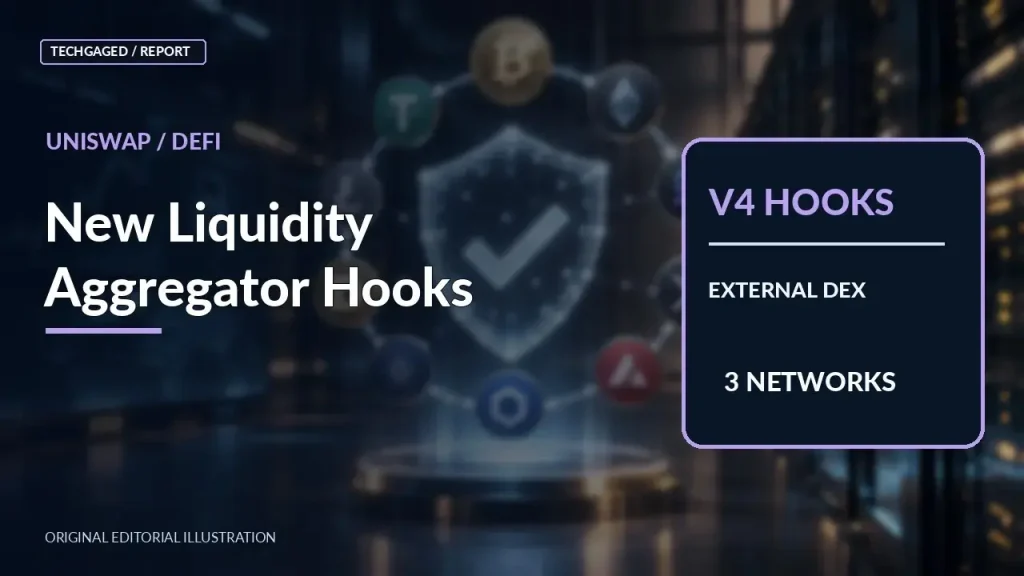
Uniswap has launched Aggregator Hooks for version 4 of its decentralized exchange infrastructure, allowing its routing system to access outside liquidity sources alongside native Uniswap pools. The product changes how a swap can be assembled while preserving a single-transaction settlement route for eligible trades.
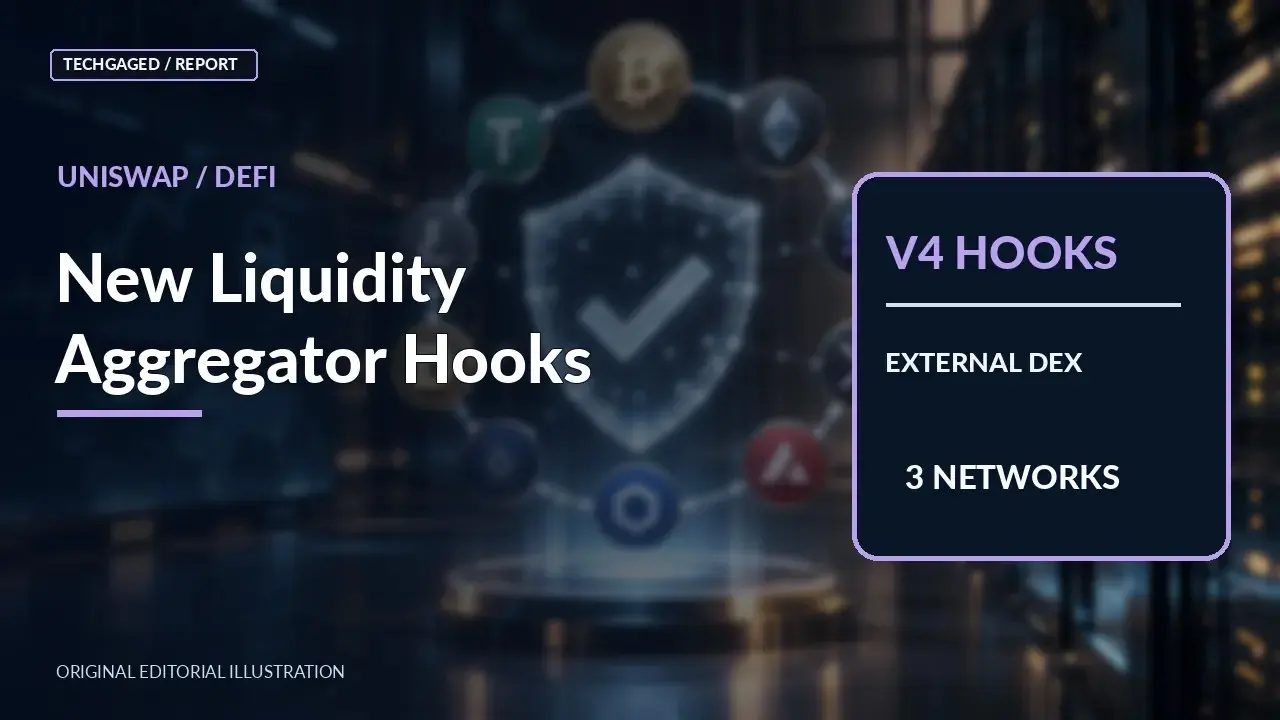
In the October 22 release, Uniswap says Aggregator Hooks are live in its Web App and API on Ethereum mainnet, Base and Robinhood Chain. Seven external sources are available at launch and collectively cover more than 90% of decentralized exchange activity on those networks, according to Uniswap. The figure refers to source coverage within the launch scope, not 90% of all global crypto trading.
The hook model wraps an outside liquidity source so that a router can treat it in a way compatible with a v4 pool. The aim is to find more efficient execution opportunities without making users perform several separate wallet approvals.
Latest Stories

Unichain Moves Toward OP Enterprise With Native Cross-Rollup Transfers Planned
Chainlink’s Vault Adapters Open One DeFi Vault to Deposits From 80+ Chains
Polygon Automates Stablecoin Payouts With Recipient and Budget Controls
What an aggregator changes in the trading process
In fragmented decentralized markets, the best price may be split across competing pools and protocols. A router that only checks one venue may miss cheaper execution, especially for large swaps or thinly traded assets.
Uniswap’s implementation checks connected sources and composes a route from the liquidity it can access. According to the release, routing through an external-source hook may still result in protocol fees that contribute to the UNI burn mechanism.
This economic structure may benefit the protocol, but the user should still evaluate net execution: price, price impact, fees, gas and slippage. Aggregation does not automatically guarantee a better outcome than every alternative venue in every market condition.
Security and market quality still matter
Every added external source expands the set of contracts and operational dependencies that interact with a swap. Robust routing needs to account for failing quotes, unavailable liquidity and transaction conditions changing before execution.
The release states that route settlement occurs in a single transaction and does not require extra approvals for the aggregator feature. That can reduce user friction, but a single atomic transaction can still fail or cost gas if the route cannot execute as quoted.
Users also should not infer that all tokens or every blockchain are available. The initial deployment is limited to the three named networks and the supported sources, with broader functionality dependent on integrations.
For the decentralized-finance market, Aggregator Hooks show how a leading protocol is competing not only through its own liquidity but also through the quality of routes it can deliver across venues. The metric that matters is realized execution quality, not just the number of sources attached.
How do you rate this article?
Subscribe to our YouTube channel for crypto market insights and educational videos.






Join our Socials
Briefly, clearly and without noise – get the most important crypto news and market insights first.
Most Read Today
1
Ripple Wins Final US Trust Bank Approval, but RLUSD Issuer Remains Unchanged
2S&P Global Ratings Brings DeFi Vault Risk Assessments Onchain Through Chainlink
3Hanwha Selects Chainlink for Global Tokenized Assets Ahead of Korea’s 2027 Rules
4Circle Opens CCTP to More Than USDC: A New Route for Issuer-Controlled Tokens
5EU Crypto Firms Face Deadline to Unwind Non-MiCA Stablecoin Exposure
Latest





8
Also read
Similar stories you might like.
Blockchain
Unichain Moves Toward OP Enterprise With Native Cross-Rollup Transfers Planned
TechGaged | 2026-11-02
Industry
Uniswap Gives Developers Live API Analytics After Reporting $2B in Routed Swaps
TechGaged | 2026-11-02
Defi
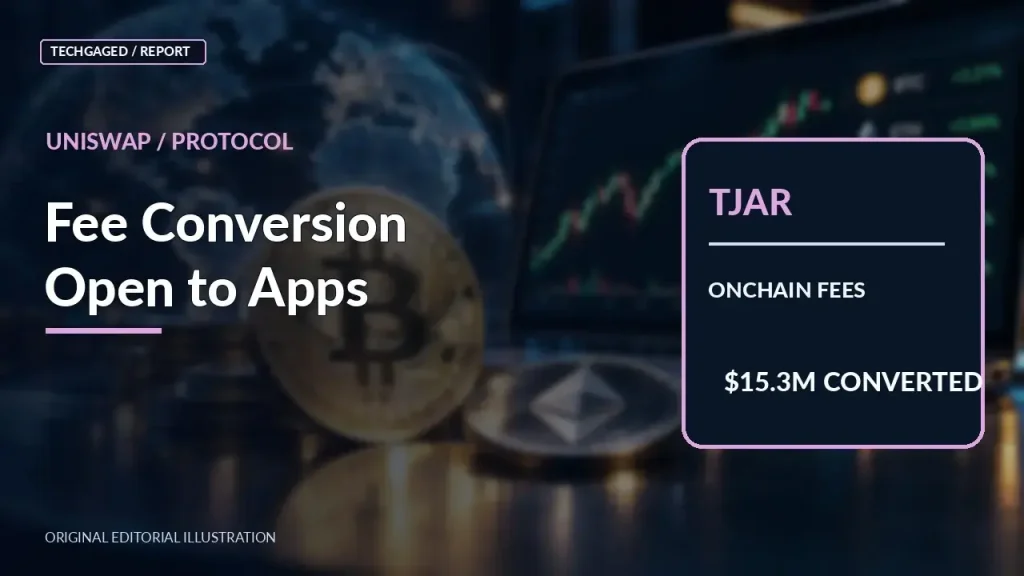
Uniswap Opens TJAR Fee Conversion to Any App After $15.3M Monthly Trial
TechGaged | 2026-11-02

Altcoins
Cardano DEX Volume Jumps 143% in a Week as DeFi TVL Rebounds
TechGaged | 2026-10-06

Crypto News
Old Raydium Code Comes Back to Bite in $1.34M Exploit
Rokas | 2026-06-11
Altcoins
Cardano’s $10 Million Question: Will Bulls Survive the Liquidity Sweep?
Azeez | 2026-03-22

Research
Stablecoins Are Quietly Rewiring Global Finance, And Most People Haven’t Noticed
Sead | 2026-03-20