






Unichain upgrading to Optimism OP Enterprise editorial
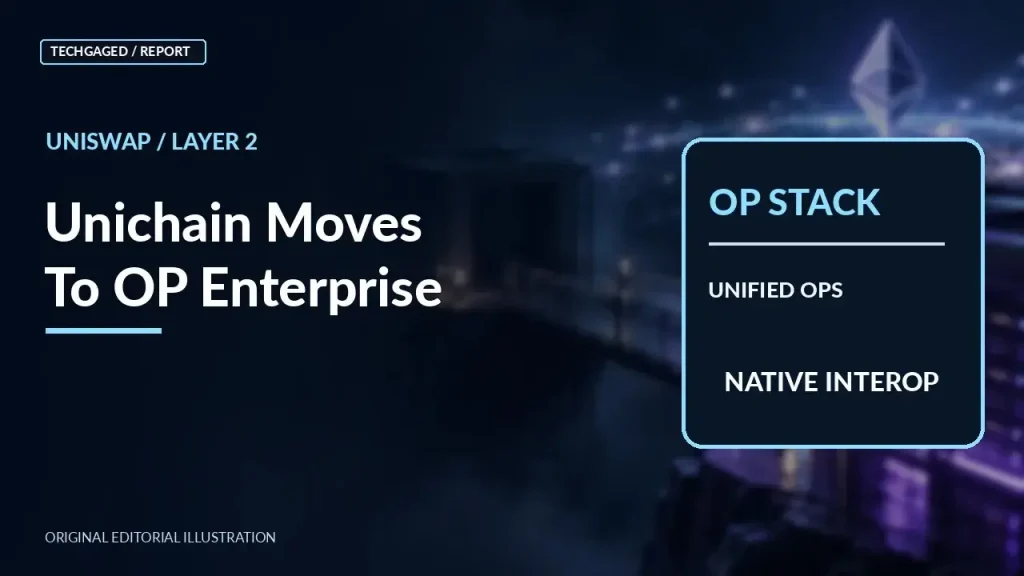
Unichain Moves Toward OP Enterprise With Native Cross-Rollup Transfers Planned
Unichain has announced a migration to OP Enterprise infrastructure designed to prepare its users and applications for native interoperability across the Optimism ecosystem. The upgrade concerns the network’s operating stack rather than a token migration, and the project says existing balances, contracts and chain identifiers are intended to stay the same.
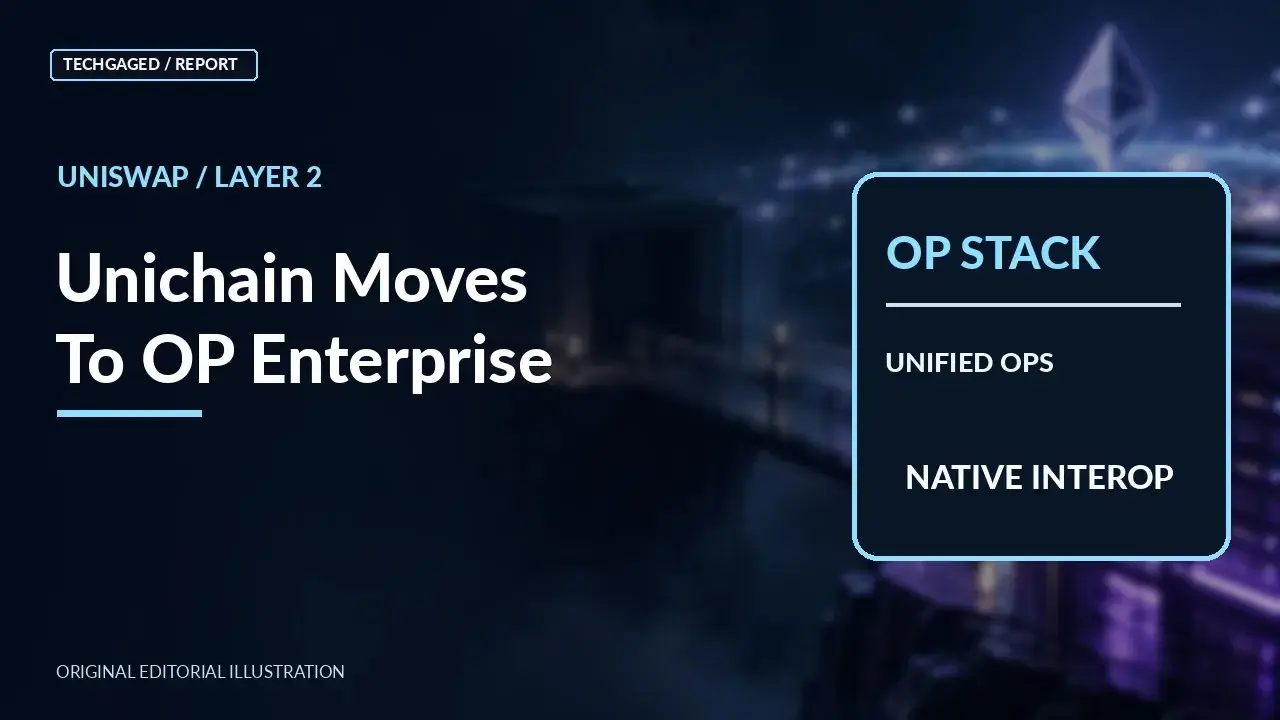
The October 9 announcement set a testnet migration date of October 13 and a mainnet target of October 29. It describes Optimism taking responsibility for production sequencing infrastructure, RPC services, monitoring and incident response.
The initial announcement laid out a timetable, but it is not itself independent confirmation that every planned cutover and future interoperability feature is now operational. Users and developers should verify the actual network status in current operator notices.
Latest Stories

Chainlink’s Vault Adapters Open One DeFi Vault to Deposits From 80+ Chains
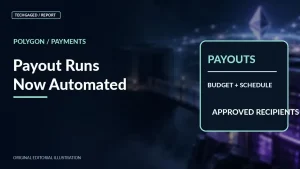
Polygon Automates Stablecoin Payouts With Recipient and Budget Controls

Coinbase Rebuilds Account Permissions for Businesses Without Replacing Its Retail Core
Why interoperability matters to DeFi users
Assets spread across separate optimistic rollups often require bridges, with users waiting for messages or accepting liquidity and counterparty risks. Native interoperability is intended to make certain cross-rollup transfers more seamless, starting with ETH when the relevant OP Stack capabilities become available.
That does not mean every token can freely move among all rollups or that legal ownership and application accounting problems disappear. Each network and asset needs compatible contracts and deployed interoperability functionality.
Unichain says it will continue as a Stage 1 rollup with permissionless fault proofs and the existing governance and security-council oversight arrangements. These are important constraints on any claim that changing the infrastructure provider also changes its security model.
What developers must test
Applications relying on RPC behavior, sequencing assumptions, transaction ordering or infrastructure monitoring should test compatibility even when contract addresses remain unchanged. A backend migration can affect operational performance without changing the application’s source code.
Network users should not be instructed to send assets to a new address solely because an infrastructure migration was announced. Any unsolicited request to bridge, reveal a recovery phrase or approve an unknown contract on that pretext should be regarded as suspicious.
The long-term value of OP Enterprise integration will depend on reliable network service and actual native cross-rollup usage. The announcement is an infrastructure roadmap and migration plan; the meaningful proof is stable operation and supported transfers once the associated features activate.
How do you rate this article?
Subscribe to our YouTube channel for crypto market insights and educational videos.





Join our Socials
Briefly, clearly and without noise – get the most important crypto news and market insights first.
Most Read Today
1
Ripple Wins Final US Trust Bank Approval, but RLUSD Issuer Remains Unchanged
2Hanwha Selects Chainlink for Global Tokenized Assets Ahead of Korea’s 2027 Rules
3Circle Opens CCTP to More Than USDC: A New Route for Issuer-Controlled Tokens
4OKX Adds Five Stock Perpetuals as Crypto Exchanges Push Further Into TradFi
5A Rare Ethereum Trend Is Emerging as Long-Term Holders Keep Taking Losses
Latest



8
Also read
Similar stories you might like.
Defi
Uniswap v4 Aggregator Hooks Add External DEX Liquidity Across Three Networks
TechGaged | 2026-11-02

Industry
Uniswap Gives Developers Live API Analytics After Reporting $2B in Routed Swaps
TechGaged | 2026-11-02
Defi
Uniswap Opens TJAR Fee Conversion to Any App After $15.3M Monthly Trial
TechGaged | 2026-11-02

Blockchain
Hedera Moves Its Bridgeless Cross-Ledger Protocol Into the Linux Foundation
TechGaged | 2026-10-04

Blockchain
South Korea’s KOMSCO Tests Full Local-Currency Settlement on the OP Stack
TechGaged | 2026-10-04