





Circle Gateway adds EURC and cirBTC editorial visual
Circle Gateway Adds EURC and Wrapped Bitcoin as Multi-Asset Settlement Expands
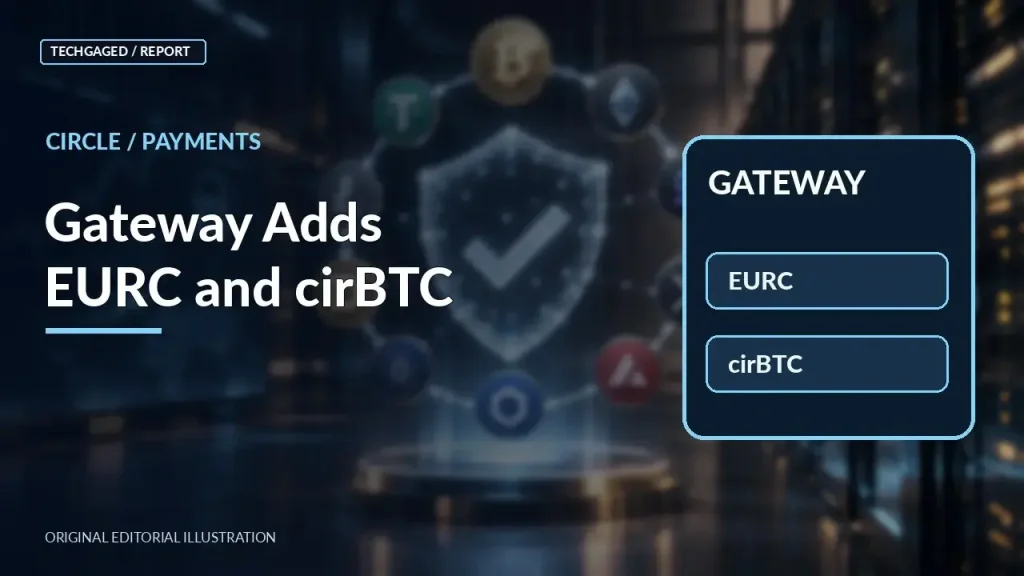
Circle has expanded its Gateway product to support EURC, its euro-denominated stablecoin, and cirBTC, a wrapped representation of bitcoin. The update broadens a cross-chain operating model that had been closely associated with moving USDC and managing balances across supported networks.
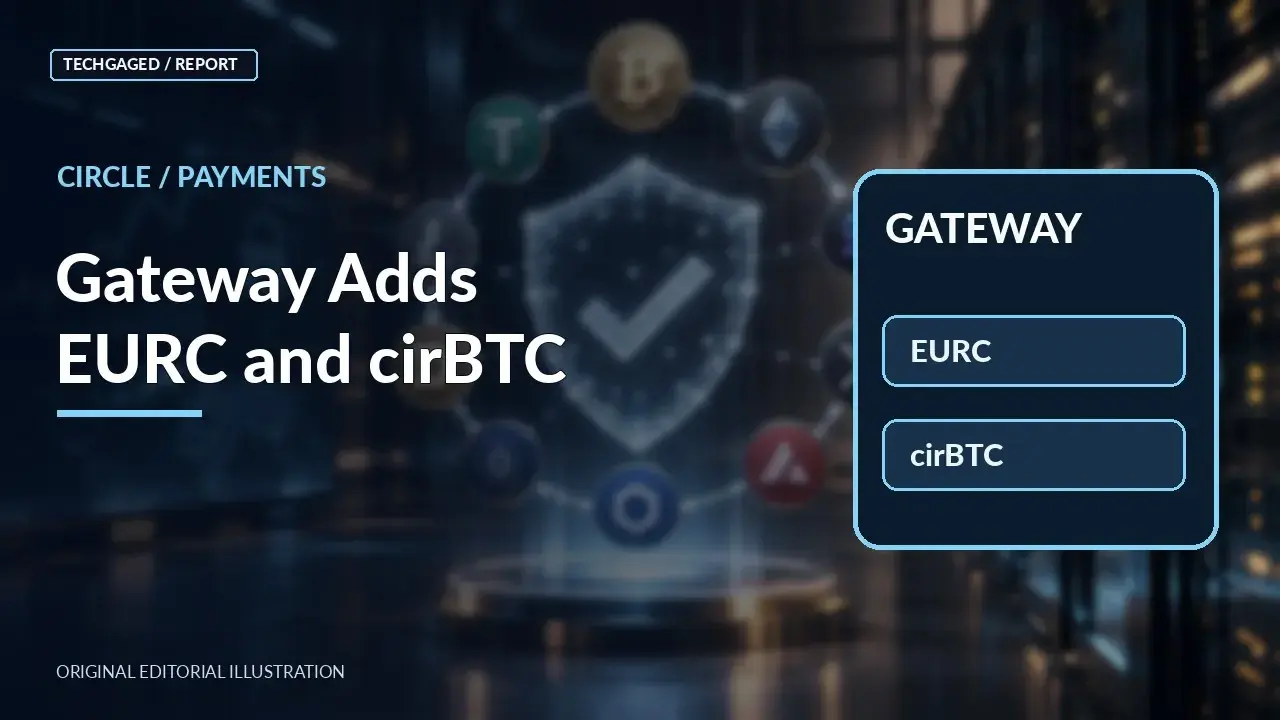
In the company’s October 23 product announcement listed in its official blog, Circle says Gateway now offers one unified balance per supported asset and capabilities for high-frequency, gas-free payment flows on eligible chains. The description does not mean that a euro stablecoin, a dollar stablecoin and wrapped bitcoin become economically interchangeable: each remains a distinct asset with different issuers, backing arrangements and risks.
The expansion matters to developers building applications that handle more than one type of token. A treasury or payment system may need to receive euros, dollars and bitcoin-backed collateral without writing separate balance-management workflows for every network.
Latest Stories
Polygon CDK Besu Connects Private Bank Chains to Public Liquidity With ZK Proofs

Ripple and C2FO Propose XRP Ledger Settlement for Approved Invoices

Uniswap Opens TJAR Fee Conversion to Any App After $15.3M Monthly Trial
Unified balances simplify software, not legal claims
Cross-chain applications often force users to keep track of where each token resides, how much gas is available and which bridge supports the destination network. A unified balance system can reduce that operational burden by coordinating eligible liquidity and transfers across different blockchain environments.
But those efficiencies depend on the product’s supported networks, liquidity and settlement architecture. An interface showing one balance is not proof that every underlying token exists on every chain or can be moved instantly to any destination. Users should verify what token they receive, what the redemption process is and who operates the infrastructure.
EURC is linked to the euro, while cirBTC is designed as a wrapped bitcoin asset that can be used in applications outside Bitcoin’s native network. Unlike actual BTC held on the Bitcoin blockchain, a wrapped representation introduces separate custody, issuance and redemption arrangements that must be assessed.
The addition of cirBTC therefore has a different risk implication from adding another stablecoin. A depositor using wrapped bitcoin as DeFi collateral should examine reserve verification, liquidation mechanics and whether its claim survives the failure of an intermediary.
Developer convenience should not obscure asset risk
Circle positions Gateway as a way to support multi-chain balances and high-frequency payments. For businesses, that could simplify routing and reduce operational complexity. The commercial value will depend on which institutions integrate it, which geographic markets are permitted and the costs of entering and exiting each asset.
There are also issues unique to euro-denominated settlement. EURC exposure introduces exchange-rate movements for companies whose accounts or liabilities are in another currency. A payment rail can move value efficiently without eliminating foreign-exchange exposure or the need for reconciled accounting.
Teams adopting the system should document token identity, supported chain routes, counterparty risk, failure recovery and how user balances are displayed during a pending transfer. A unified presentation can be valuable, but it should never conceal a material difference in legal or technical rights.
As we explained in our native-versus-bridged stablecoin guide, tickers and balances only tell part of the story. The Gateway expansion is a practical infrastructure update; evidence of lasting value will come from real settlement volumes and reliable end-to-end transfer outcomes.
How do you rate this article?
Subscribe to our YouTube channel for crypto market insights and educational videos.






Join our Socials
Briefly, clearly and without noise – get the most important crypto news and market insights first.
Most Read Today
1
Circle Opens CCTP to More Than USDC: A New Route for Issuer-Controlled Tokens
2OKX Adds Five Stock Perpetuals as Crypto Exchanges Push Further Into TradFi
3A Rare Ethereum Trend Is Emerging as Long-Term Holders Keep Taking Losses
4Akash Plans One-Way AKT Migration to Solana With a Two-Year Claim Window
5Binance Publishes Verifiable Reserves for 10 Tokens After $6.3B Hack
Latest






8
Also read
Similar stories you might like.
Industry
Circle Match Gives Institutions an Hourly USDC Mint-and-Redeem Auction
TechGaged | 2026-11-02
Altcoins
Coinbase Adds Ripple’s RLUSD on XRP Ledger, Base and Ethereum
TechGaged | 2026-11-02
Blockchain
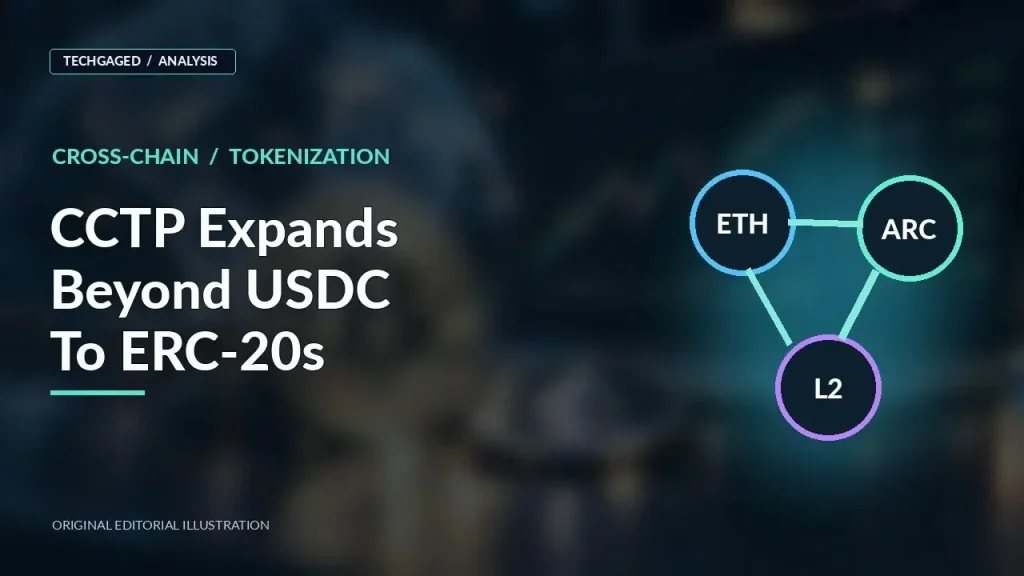
Circle Opens CCTP to More Than USDC: A New Route for Issuer-Controlled Tokens
TechGaged | 2026-11-02
Regulation
Circle Wants Qualifying Stablecoins Treated as Cash Under SEC Proposal
TechGaged | 2026-11-02

Crypto News
Rain Files for a U.S. National Trust Bank Focused on Stablecoin Infrastructure
TechGaged | 2026-10-06
Altcoins
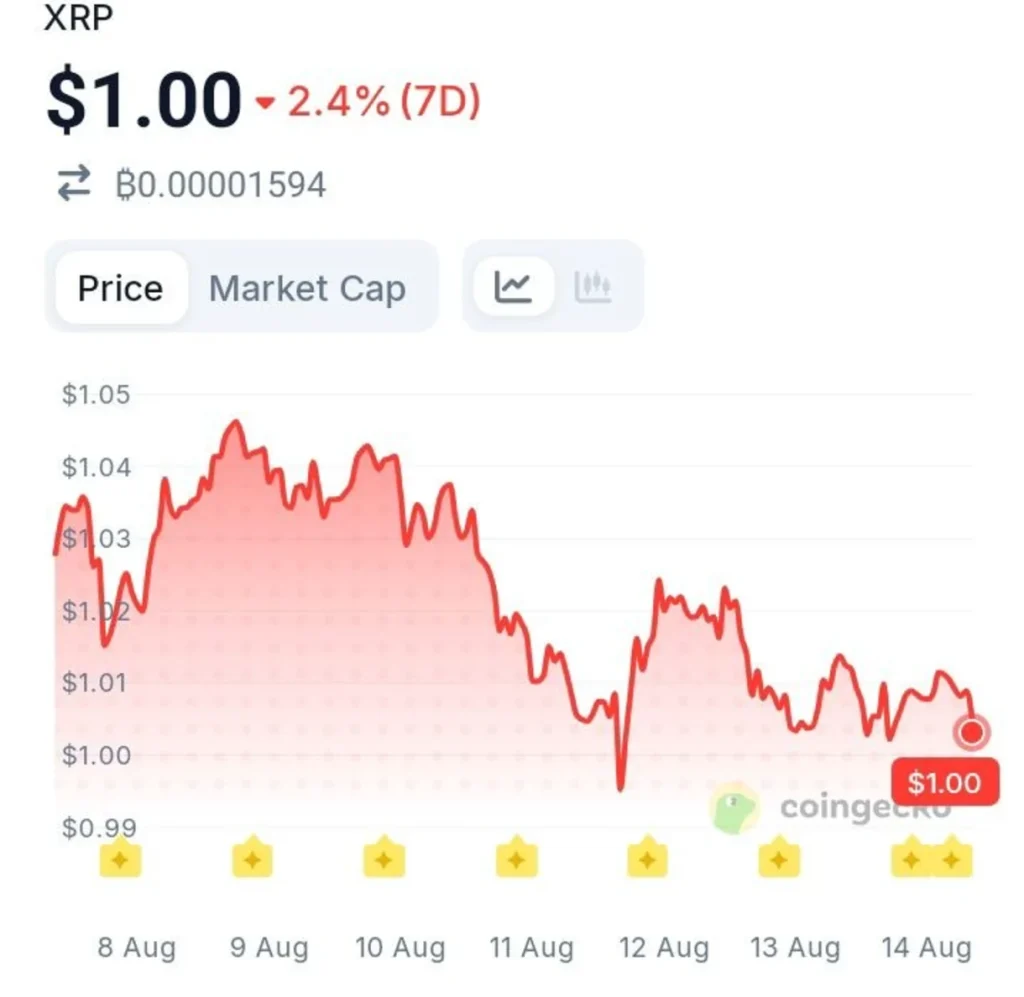
XRPL Stablecoin Supply Hits $1.31B as RLUSD Captures 93% of the Market
TechGaged | 2026-10-06
Regulation
US Government Moves to Seize $1.76 Million in USDT
Rokas | 2026-07-22
Crypto News
Wall Street Giant BNY Bets Bigger on USDC
Ana | 2026-06-30
Crypto News
SBI Launches Japan’s First Trust-Type Yen Stablecoin
Rokas | 2026-06-25

Crypto News
Fed Proposal Brings Bank-Style KYC to Stablecoins
Ana | 2026-06-19