

Solana Firedancer Agave developer upgrade editorial visual
Solana Separates Program Build Tools From CLI as Firedancer Gets New Release
Solana’s latest engineering update includes a change to how developers install tools for building blockchain programs, alongside new validator releases and work on transaction-handling performance. The October 29 update is focused on software infrastructure rather than a new cryptocurrency product or a consensus migration that has already finished.
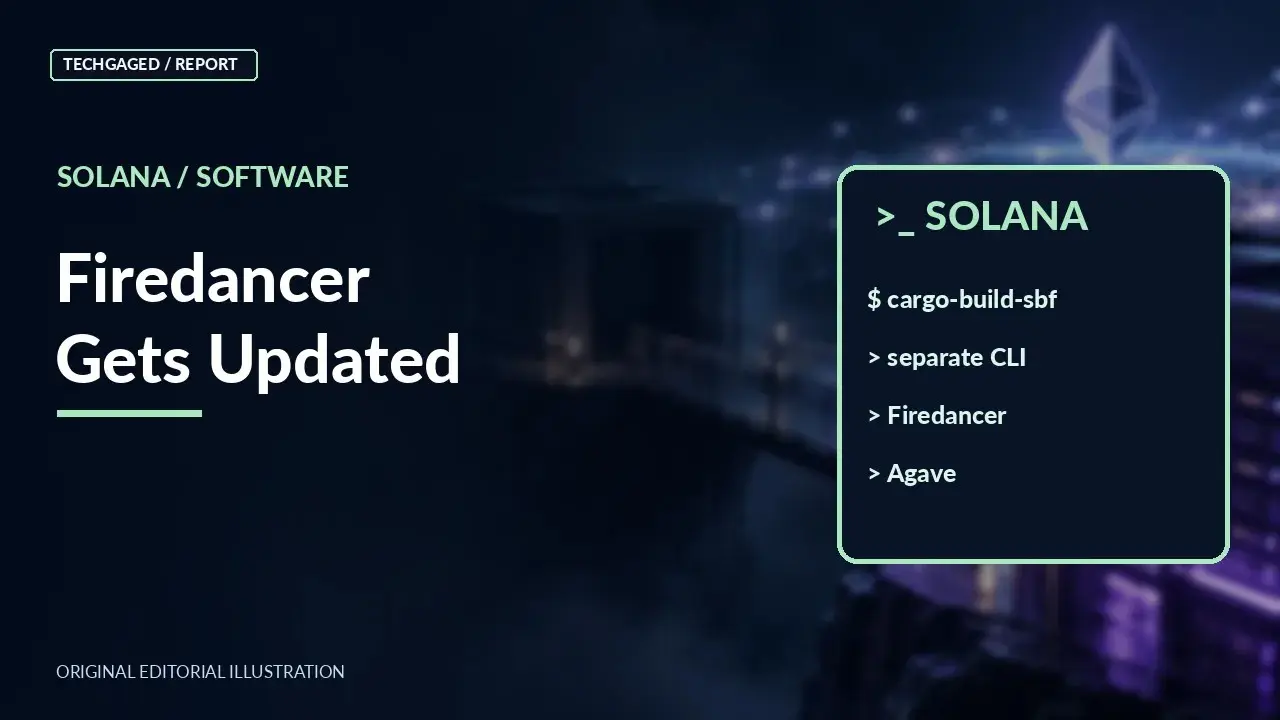
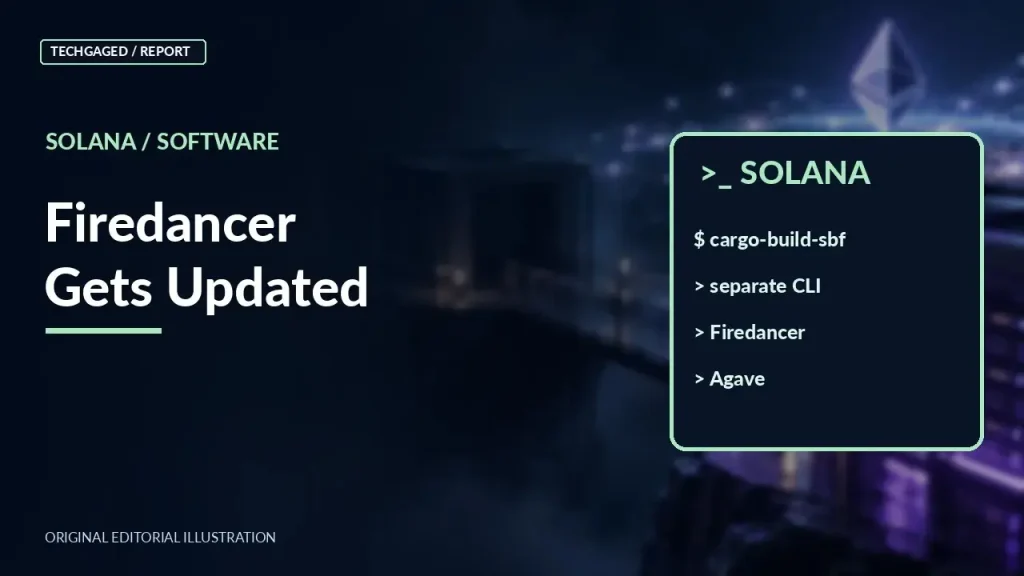
According to the Solana Foundation changelog, the cargo-build-sbf program builder is being separated from the main Solana CLI installation. Developers who compile Solana programs will need to install and maintain the builder independently as the packaging change takes effect. The newsletter also lists the Agave v4.4.0 and v4.5.0-alpha.4 releases and Firedancer mainnet version v26.10.5.
These are distinct software components, and not all users need each one. A basic wallet holder has no reason to install a program compiler or validate that its terminal has the latest validator client. Developer and node-operator workflows require more careful release management.
Latest Stories
Abu Dhabi Asset Manager Uses Chainlink to Put Compliance Checks Into Token Transfers
Uniswap Gives Developers Live API Analytics After Reporting $2B in Routed Swaps
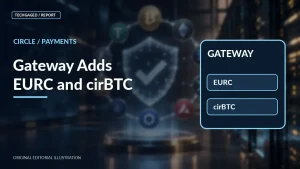
Circle Gateway Adds EURC and Wrapped Bitcoin as Multi-Asset Settlement Expands
A smaller CLI and more specialized development tools
The CLI is used for transactions, configuration and network interaction, while cargo-build-sbf compiles Solana programs for deployment. Separating them allows teams to manage dependencies more selectively and may reduce unnecessary installation burden for those who only need transaction and administration commands.
The changelog also says offchain message-signing support has been released. That capability is distinct from transferring tokens: a user or service can sign a message to demonstrate control of a key without necessarily sending a transaction to the blockchain. Developers still need to use unambiguous signing formats and prevent a seemingly harmless message from becoming part of a deceptive authorization flow.
Work on transaction versioning and validator performance continues across Agave, Firedancer and ecosystem tools. The newsletter describes a reusable worker-pool implementation, proposed improvements to program loading and support for different networking hardware. Some changes are planned work rather than features every validator is already running.
Why release notes matter for reliability
Validator software must balance throughput, network connectivity, memory use and compatibility. A release may improve one workload while introducing a regression in another, making a staged upgrade and monitoring process important for production operators.
The Foundation also notes RustSec advisories affecting packages used by parts of the development ecosystem, with patches made in affected clients and expected in forthcoming releases. This wording should not be misrepresented as an announcement that the Solana network has been exploited or that every package has already shipped a patched release.
For developers, the practical checklist is to verify binary release provenance, pin dependencies for reproducible builds, test program deployment and transaction signing against the intended cluster, and review version compatibility before changing production systems.
It is also worth distinguishing a client release from an activated protocol feature. New software can contain support for capabilities that will only become active after a separate network process. The appearance of Alpenglow-related tooling in a release note, for example, is not proof that all proposed consensus changes have gone live.
The October changelog shows continued work on the engineering foundations that support Solana’s throughput and developer experience. Meaningful adoption will be demonstrated through measured reliability and successful operations rather than through unverified price predictions.
How do you rate this article?
Subscribe to our YouTube channel for crypto market insights and educational videos.




Join our Socials
Briefly, clearly and without noise – get the most important crypto news and market insights first.
Most Read Today
1
Circle Opens CCTP to More Than USDC: A New Route for Issuer-Controlled Tokens
2OKX Adds Five Stock Perpetuals as Crypto Exchanges Push Further Into TradFi
3A Rare Ethereum Trend Is Emerging as Long-Term Holders Keep Taking Losses
4Akash Plans One-Way AKT Migration to Solana With a Two-Year Claim Window
5Binance Publishes Verifiable Reserves for 10 Tokens After $6.3B Hack
Latest

8
Also read
Similar stories you might like.
Industry
Uniswap Gives Developers Live API Analytics After Reporting $2B in Routed Swaps
TechGaged | 2026-11-02
Blockchain
Solana Publishes Open-Source Delivery-versus-Payment Program With JPMorgan Input
TechGaged | 2026-11-02
Industry
Polygon Open Money Stack Adds Solana for Full Bank-to-Stablecoin Payments
TechGaged | 2026-11-02
Industry
Samsung Wallet’s USDC Plan Reaches 82M Galaxy Devices, but Access Isn’t Automatic
TechGaged | 2026-11-02
Blockchain
Akash Plans One-Way AKT Migration to Solana With a Two-Year Claim Window
TechGaged | 2026-11-02
Crypto News
Solana’s Real-World Assets Surge to a Record — Is a Bigger Growth Phase Ahead?
Azeez | 2026-10-30
Crypto News
What Would Solana’s Consensus Look Like in a Post-Quantum World?
Azeez | 2026-10-28
Crypto News
Altcoin Speculation Retreats From September Highs: What It Means for Buyers
Azeez | 2026-10-27
Crypto News
SOL Gets a Major Network Upgrade as Alpenglow Goes Live
Azeez | 2026-10-22
Crypto News
Solana Could Become the World’s Fastest Blockchain After This Upgrade
Azeez | 2026-10-14